Does the New Testament Endorse Antisemitism? Part I
When the New Testament’s toughest verses are read in the world of Jesus and his Jewish contemporaries, they speak of intra‑Jewish dispute—not of hatred toward the whole people of Israel.
1. Introduction – The New Testament: The Source of Antisemitism?
In my introductory article on Christian antisemitism,[1] I asked the question, “Is Christianity antisemitic?” I worked with the following definition of antisemitism: A hostility against Jews that has morphed from disagreements over ideas to the hatred and coercion of Jews themselves and the desire to act upon one’s hatred.[2] The answer to the question, I found, was complicated, because there have been many expressions of Christianity for the last two millennia that were overtly antisemitic in their theology, politics, and morality—however, I believe these antisemitic positions were not present among Jesus’ earliest followers. Moreover, many Christians today have repented of antisemitism, even adopting a warm appreciation for Jewish people in line with the example given in the New Testament passage of Romans 11.
My previous discussion about Christian antisemitism was primarily historical in nature; it traced the introduction of anti-Judaic tendencies into the church and showed how they were not present at the beginning. Despite my claim that Yeshua’s early followers were not antisemitic, some claim that certain passages in the New Testament are intended to inspire hatred of the Jewish people.
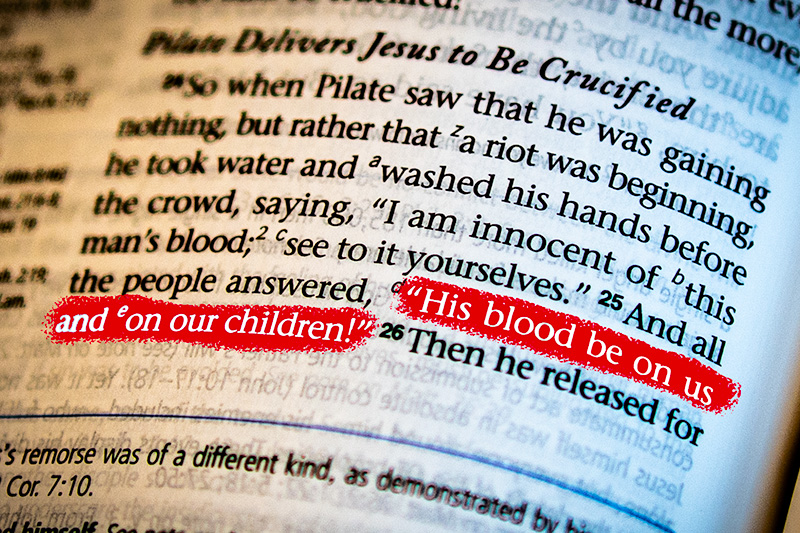
For example, Rabbi Dr. David Berger of Yeshiva University speaks of recent Christian attempts to revise Christian theology to be more Jewish-friendly. While these attempts may be an encouraging development, he writes that they may not be good enough “because there still remain those ‘few notorious passages’ in the New Testament which have undeniably bred anti-Semitism in the past. If, for example, the Jews really said that Jesus’ blood would be on them and on their children, and if Matthew’s report of this statement is read as a theological endorsement (Matt 27:25), anti-Jewish consequences could not easily be avoided.”[3]
We at Chosen People Answers reject antisemitism and deny that it is the direct result of the New Testament's teachings. But are we only able to say this because we turn a blind eye to the New Testament’s antisemitic passages? Is our stated pro-Jewish attitude fundamentally irreconcilable with the New Testament itself? Are we promoting a theological understanding of believing in Yeshua that is myopic and simply the result of post-Holocaust friendliness to Jews—that is, a theological fad?
I recognize the power of this argument; there are, indeed, problematic passages in the New Testament that have a tragic history of misuse by Christians in their hostility toward Jewish people. Instead of talking about the history of Christian theology, ecclesiology, and political ethics as I have elsewhere, I will now focus upon the fountainhead from which Christian and Messianic Jewish teaching is supposed to flow: the New Testament itself.
Table 1 - Problem Passages in the New Testament
“[Let] his blood be on us and our children.” | |
Matthew 23 | Hypocrites, brood of vipers, and murderers of the prophets. |
The Gospel of John | The usage of “The Jews” |
“You are of your father the Devil.” | |
Acts 2 & 3 | “You crucified and killed... the Author of life.” |
“The Jews, who killed both the Lord Jesus and the prophets.” | |
“No one is a Jew who is merely one outwardly.” | |
“A synagogue of Satan.” |
I will address each of these passages in depth in Part II of this article.
As I begin this examination of New Testament texts, I build upon the foundational discussion that was sparked by the 1934 publication of James Parkes’ The Conflict of the Church and the Synagogue. That seminal study, though attempting to sound the alarm about rising antisemitism but not capable of stopping the Holocaust that was soon to come, became a prophetic warning in hindsight to those who reckoned with the aftermath of the Nazi regime. As part of that reckoning, the New Testament’s passages about Jewish people came under scrutiny. Both Jewish and Gentile scholars have investigated the New Testament’s alleged antisemitism, including Jules Isaac, Gregory Baum, Rosemary Ruether, Paula Fredriksen, Geza Vermes, Amy-Jill Levine, Adele Reinhartz, and a host of others.[4]
2. An Appeal to Those Who Have Not Yet Read the New Testament
I recognize that it is difficult for many Jewish people to entertain the notion that the New Testament may be friendly to Jewish people. Many in the Jewish community exemplify skepticism, distaste, and fear over the New Testament’s contents.
Admittedly, asking Jewish people to open the New Testament is somewhat uncommon, even odd, given its history. “Even most well-educated Jews still do not expose themselves to this subject,” writes Rabbi Michael Cook, a scholar of Judeo-Christian studies at Hebrew Union College, about the New Testament.[5] Biblical scholars Amy-Jill Levine and Marc Zvi-Brettler remark on the illiteracy many Jewish people have regarding the New Testament, saying, “Many Jews are unfamiliar with, or even afraid of reading, the New Testament. Its content and genres are foreign.”[6] Moreover, the history of the use of the New Testament against the Jewish people can repel Jews from wanting to open its pages. Rabbi Cook claims that this aversion is because “the New Testament has exerted the most harmful impact on the Jewish people’s history.”[7]
Often times, the public perception of any given work can be bound up in the things that it inspires. It can be difficult to disassociate the New Testament texts from the weight of a history that includes crusades, inquisition, the Holocaust, various pogroms, and countless other persecutions. To these we may add the taunts, beatings, and other hatred and violence experienced by so many Jewish people alive today, all too often actions that were taken in the name of Christ. But these painful events recounted are all many generations removed from the lives of the people who wrote the New Testament, and the men and women who learned from them and helped to grow the earliest congregations of Yeshua-followers.
I contend that texts are best understood from within the context in which they were written, and that the New Testament is no exception. As difficult as it may be to set aside the wounds caused by actions taken in its name, I approach the New Testament from within its original framework. I humbly invite you to also take that difficult leap with me, to see what can be learned.
This call to view the New Testament in this way has been catching on among Jewish scholars. One of the most striking developments in recent New Testament scholarship has been a growing number of Jewish scholars from Reform, Conservative, and Orthodox backgrounds coming to recognize the Jewishness of Jesus and the New Testament.[8] One example of this interest in Jesus by Jewish scholars is The Jewish Annotated New Testament, edited by Amy-Jill Levine and Marc Zvi Brettler:
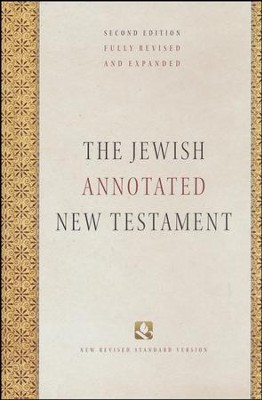
Figure 1 - Amy-Jill Levine and Marc Zvi Brettler, eds., The Jewish Annotated New Testament, 2nd ed. (Oxford, UK: Oxford University Press, 2017).
This unique work represents the culmination of a century of Jewish scholarship that has attempted to recover the Jewishness of the New Testament. None of the contributors to the project believe that Yeshua is the Messiah, yet they provide a scholarly and largely balanced presentation of the New Testament’s Jewish context. The contributors believe that the New Testament is an important contribution to Jewish history since the New Testament bears witness to ancient Jewish customs, halakhic disputes, diasporic communities, and much more. Without the pages of the New Testament, many historical details about ancient Jewish people would have been lost forever.
In their preface to this work, Levine and Brettler suggest that their readership consider new readings of controversial texts:
[T]he volume addresses problems that Jewish readers in particular may find in reading the New Testament, especially passages that have been used perpetuate anti-Judaism and the stereotypes that non-Jewish readers sometimes bring to the texts. Therefore, in addition to emphasizing the Jewish background—or better, the Jewish contexts—of the New Testament, we pay special attention to passages that negatively stereotype Jews or groups of Jews, such as the Pharisees or the “Jews” in John’s Gospel. Jews have for far too long been accused of being “Christ killers,” or regarded as Judases, or seen as the venal descendants of the Temple’s “money changers.” The authors in this volume do not engage in apologetics by claiming that these statements are harmless. In some cases, they contextualize them by showing how they are part of the exaggerated language of debate of the first century, while elsewhere they note that the statements may not have always been understood accurately by later Christian tradition. An excellent example of the latter is reflected in the annotations to Matthew 27.25: “Then the people as a whole answered, ‘His blood be on us and on our children!’” The annotation observes that the verse may be referring to the destruction of the Second Temple in 70 CE, and the “children” may be specifically the generation after Jesus who experienced that destruction, and not Jews in perpetuity. Similarly, the notes to Revelation propose that the polemic against the “synagogue of Satan, who say that they are Jews and are not” (Rev. 3:9) is not against Jews at all, but is against Gentile followers of Jesus who promote Jewish practices. These annotations cannot undo the harm that such verses have done for two millennia, but they may help both Jews and Christians see that certain pernicious interpretations of the New Testament are not based on the actual text, as they have been assumed to be.[9]
I believe that Levine and Brettler have vitally challenged New Testament scholarship by showing how old interpretations of “antisemitic” passages in the New Testament need to be revisited and revised. Their discussion of two problematic New Testament passages (Matthew 27:25 and Revelation 3:9) are similar to my own analysis, as shown below. The cost of neglecting to reinterpret such passages would be perpetuating an inaccurate and harmful interpretation of the New Testament and would be contributing to the propagation of antisemitism in Christian circles.
While there is an intellectual cost in neglecting the New Testament, I believe there is a spiritual cost as well. If Yeshua is who he claimed to be—the Messiah of Israel—then neglecting the primary texts that speak about his life and teachings would be a tragic loss. I encourage my readers to give the New Testament the benefit of the doubt and consider its teachings with an open mind.
3. Some Notes on the Reliability of the New Testament Texts
Elsewhere on Chosen People Answers, we discuss our understanding of the New Testament’s authorship, dating, reliability, and authority. These are not trivial issues, but rather involve a host of historical and faith-based decisions.
For example, if one believes that an eyewitness disciple of Jesus wrote the Gospel of Matthew, then that immediately shifts the question of its reliability into its favor. Alternatively, if Matthew was written pseudonymously by a man who never knew Jesus or his disciples, perhaps at the end of the first century CE when eyewitnesses were dead, then that would reduce the probability that the book includes truthful information about what Jesus said and did.
At Chosen People Answers, we accept the authenticity, reliability, and authority of all twenty-seven books of the New Testament. We believe this is based on good evidence that the events they describe actually occurred, and that the books of the New Testament are neither fiction nor forged propaganda. Similarly, we hold to the reliability of the books of the Tanakh as the Word of God.
As a byproduct of our position on the New Testament, we decline to consider solutions to problematic New Testament texts that infer anything less than the authenticity, reliability, and authority of the texts themselves.[10] For example, it is not an option for us to simply take a white-out pen and erase the controversial passages. We cannot do this because we believe they were actually written or spoken by Jesus and his apostles, whom we believe are authoritative. Likewise, it is not an option to conjecture that Matthew intentionally misrepresented Jesus’ words, or that Paul did not actually write a passage, or that later Gentile scribal copyists inserted anti-Judaic text into the early New Testament manuscripts, or that John presents a skewed and irreconcilable version of Jesus when compared to the other Gospels.
It is our position that these theories, skeptical of the text at the very foundation of faith in Yeshua, may be tempting solutions for those who do not believe in Yeshua, but are problematic for those of us who believe the solutions should be sought—and can be found—in the text itself. As I will explain below, I do not believe we need to deconstruct or undermine the problematic New Testament passages to undo the inflammatory language. It is possible to retain belief in the trustworthiness and authority of the New Testament, even with its problematic passages, while also advocating for a pro-Judaic faith in Yeshua.
4. The Dynamics of Jewish Family Disputes
The first paradigm shift that helps us move forward in this discussion is to recognize that the controversies in the New Testament are not between “Jews” and “Christians,” but rather between Jews who do not believe Yeshua is the expected Messiah and Jews who do believe he is the expected Messiah. That’s right: It is a family disagreement. It’s more like Chabad versus Modern Orthodox than it is Jew versus Christian. There may be an “us” versus “them” in the debating over who Jesus is, but all the Jews in the New Testament know that they are part of the “us” of Am Yisrael. There are no Gentiles in the recorded disagreements: no Gentile popes or kings or bishops, just Jewish people. Christian theologian Donald Hagner writes,
Jesus was a Jew, the Twelve were Jews, and earliest Christianity consisted exclusively of Jews. These Jews never would have regarded their faith as an anti-Judaism. Indeed, Christianity itself can be construed as a form of Judaism. Jewish believers in Jesus did not stop being Jews. They did not regard themselves as having converted to a new religion. Instead, they regarded their new faith as the fulfillment of their Judaism. It was the true Judaism.[11]
4.1. Jewish Disputes in the Second Temple Period and Talmudic Era
Many Jewish groups were fighting for their vision of the future of Judaism around Jesus’ time. There were so many different Jewish sects in the Second Temple period that some scholars claim that there were “Judaisms” in the period, not one common Judaism.[12] Christian origins scholar Luke Timothy Johnson writes, “So-called normative Judaism was not normative in the period of the NT. The question Who is a real Jew? was then an open question, debated fiercely and even violently by rival claimants.”[13] Some Jewish sects openly advocated violence toward fellow Jews (which the New Testament never does), and others used harsh rhetoric and talk about eternal destinies to advocate separations between “good Jews” and “bad Jews.”
For example, two centuries before Jesus, Mattathias and Judah Maccabee ruthlessly pursued, forcibly circumcised, and even killed fellow Jews who had assimilated to Greek customs (1 Macc. 2:44–48; 3:5–6). Negative Jewish attitudes towards the disputed-identity Samaritans during the Second Temple period are well attested.[14] The Dead Sea community also spoke harshly against other Jews of the time. Second Temple Judaism scholar Craig Evans highlights some of the rhetoric in the Dead Sea Scrolls, dating to the Second Temple period:
[T]he covenanters of Qumran hated all Jews who were not members of their community (1QS 1.9–10), prayed that apostates never be forgiven (1QS 2.4–9), and eagerly anticipated the future judgment of the wicked of Israel (1QH 4.18–20). Indeed, the members of Qumran believed that they would take part in punishing those outside their community (1QpHab 5.3–5).[15]
If one takes the time to read the passages quoted by Evans, they depict strikingly harsh language of one group of Jews against another.[16]
The Jewish historian Josephus is another example of a writer who was unafraid to point the finger and assign blame to fellow Jews for catastrophes, such as the temple’s destruction. Luke Timothy Johnson summarizes Josephus’ rhetoric against the Zealots, upon whom the Jewish historian blamed the destruction of 70 CE:
He calls the zealots “ironhearted men” (5.9.4 §416), who are “blinded by fate” (5.8.2 §343; 5.8.7 §572). They profane the Temple, so that it is no longer the dwelling place of God (5.1.3 §419). God turned from the sanctuary because of their deeds (2.19.6 §539). God had long ago sentenced the Temple to flames (6.4.5 §250), deciding to “condemn the city and purge the sanctuary by fire” (4.5.2 §323). God is on the side of the Romans against these rebellious Jews (5.9.3 §369; 5.9.4 §412). The destruction of the city is a punishment from God (6.2.1 §110), a vengeance from heaven for the guilt of the Zealots (2.17.10 §455).[17]
If we go a bit later than the New Testament into the era of the Mishnah, which is a product of the rabbis who succeeded the Pharisees (roughly 200 CE, m. Pirke Avot 1), we find the sages proclaiming that “all Israelites have a share in the world to come” except for “he who says, the resurrection of the dead is a teaching which does not derive from the Torah.”[18] The sages then condemn the Sadducees, the priestly sect mentioned in the New Testament, who were widely known for their rejection of the doctrine of resurrection (Acts 23:8; Josephus, Antiquities 18.16). Thus, the sages taught that another Jewish sect would be barred from entrance to the world to come.
This type of rhetoric continues into the Talmudic era as well. Ethics professor Hershey Friedman has investigated the use of insults, reprimands, rebukes, and curses in the Talmud.[19] When disagreeing on halakhic matters, sages called each other “the children of Keturah,” “first-born of Satan,” “one who has never studied the law,” “no brains in his head,” “foolish Galilean,” “stupid as a donkey,” and the like. If a sage crossed a line, he could have his name erased from the tradition.[20]
I intend to highlight these examples of polemic to show that the New Testament’s vision of a true Judaism—with negative rhetoric against those who disagree—was not without precedent in Jewish circles. Luke Timothy Johnson surveys Gentile and Jewish use of negative rhetoric during the Hellenistic period and concludes,
I suggest that the slander of the NT [New Testament] is typical of that found among rival claimants to a philosophical tradition and is found as widely among Jews as among other Hellenists. I further suggest that the way the NT talks about Jews is just about the way all opponents talked about each other back then.[21]
Even so, the New Testament’s polemical rhetoric is considerably mild when compared to other Jewish polemic during the period.[22] This is evidenced in the New Testament’s refusal to advocate coercion or violence against errant groups, and its continual appeal that other groups repent of their positions and experience personal and spiritual transformation. The New Testament pushes away with one hand while inviting in with the other, not unlike Israel’s prophets of old.
4.2. The Unfortunate Character of Family Disputes
These examples of infighting between different Jewish sects illustrate how inter-family disputes have a different character than disputes between two parties who have no relationship of loving kinship with each other. In a dispute between an employer and an employee, a boss can fire the employee, or the employee can quit. In business deals, the contract may be terminated. In marriage, a spouse can seek a divorce. But with the blood relatives of brothers, sisters, parents—with family—connections are not so easily dissolved.
In a family dispute, there is much more to lose. Bonds that were close begin to fray. Warmth turns to coldness; feelings of safety turn to guardedness. And yet, shared origins, shared experiences, shared biology, the memories of meaningful days gone by, and the desire to preserve togetherness for the future all work together to bring a grave seriousness and passion to a family dispute. Estrangement, dissension, and rupture are on the table, and talk of wrongs committed, guilt, stubbornness, and pain only heighten the crisis. In such an inter-family conflict, restrained niceties give way to full-throated emotion, whether outbursts of frustration, unapologetic truth-telling, or tearful pleas for a changed course.
When the future of the family is on the line, combined with convictions about true faithfulness to God, all other considerations about propriety, manners, and yes, even negative rhetoric, often go out the window. There is too much to lose in relationships to hold back. Each side of this family dispute is bitter, having the opinion that the other side has betrayed God. Each side knows the shared familial origins of the other. Each side is broadcasting their disagreement and their estrangement from the other. Consequently, family religious arguments can be some of the most painful, hurtful, and scarring experiences people ever go through, even more so if the conflict drags on without a happy resolution.
In the New Testament, we are reading the correspondence of one side in a family religious dispute, written circa 50–95 CE. We lack similar early primary documents by non-messianic Jews directly mentioning the sect of Jews who believed in Jesus. Unfortunately, we have to wait several generations to hear the other side’s story with the Amidah's Nineteenth Benediction (Birkat Ha-Minim, disputed dating; 80-400 CE)[23] and the Talmud (400–600 CE).
Matters are complicated because, historically, Gentile outsiders have only read one side’s story. For centuries, the curses on Jewish Christian heretics in the Nineteenth Benediction remained cloaked in Hebrew and recited in the private halls of synagogues; the rival stories about Jesus (i.e., b. Sanh. 43a) and the rightness of his execution were kept hidden in the Talmud, away from Gentile outsiders’ eyes, largely until the Middle Ages.[24] If an outsider wanted to know the position of Jesus’ Jewish opponents in their own words, significant linguistic and cultural barriers stood in the way. In contrast, if an outsider wanted to know the position of Jesus’ Jewish supporters in their own words, they could consult versions of the New Testament written in their vernacular language and spread throughout the world,[25] a result of the messianic Jewish community’s focus on spreading the message of Jesus to the nations.
The reason why this article needs to be written, rather than an article about rhetoric against Yeshua-followers, is because the testimony of Jesus’ Jewish followers got more publicity and garnered more outsider agreement than Jesus’ Jewish opponents. Within a few centuries of those victories, Gentile outsiders, who were not party to this original debate, transformed and mutilated it into something unrecognizable. As the centuries passed, the distance from the Jewish context of the New Testament led to atrocities for the Jewish people.
Moreover, because the opinions of “the other side of the story”—that is, rhetoric against followers of Yeshua—are less familiar, the New Testament is sometimes singled out for criticism of its rhetoric. Johnson writes, “Readers today hear the NT’s polemic as inappropriate only because the other voices are silent.”[26]
So what do we have here? We have two Jewish communities, two different opinions about Jesus, and a radical divergence of paths after the pain of disagreement became too much to bear. And yet, for all their estrangement, Jewish believers in Jesus and Jewish nonbelievers in Jesus remain brothers and sisters. Neither side can really get away from the other.
James D.G. Dunn of the University of Durham is one of the leading experts on what scholars have termed, “The Parting of the Ways,” which addresses how “Christianity” and “Judaism” became recognized as two vastly different religions, when they both sprung from the milieu of Pharisaic Judaism. In his analysis of the Gospels of Matthew, Luke, and John, Dunn writes,
All three [Gospel writers] certainly reflect the fact that the bulk of the Jewish people had (so far) rejected the message of Jesus the Christ. All three reflect the puzzlement, hurt, and, yes, anger which that rejection provoked. But they still write as those for whom the issue is not closed…. For Luke, John and Matthew, the match was not over; all was still to play for. Judaism was not yet solely rabbinic Judaism. Christian Judaism was not yet simply Christianity. Others may be building the walls and a tighter circle round the Torah. But Matthew, John and even Luke still see themselves as within the older walls of Judaism of Jesus’ time.
Most, if not all of the polemic in these three writings has the character and intensity of sibling rivalry—able to be so hurtful, because the weak points are so well-known; having to be so dismissive, in order to establish their own identity in distinction from the other. But there is also at least something also of prophetic critique in the polemic.[27]
As Dunn says, the New Testament denies that the case is closed or that the time of persuasion has given way to permanent estrangement and coercion. Instead, the Jewish New Testament authors often saw themselves in the light of Israel’s prophets, who would truth-tell about Israel’s failures with candor, calling her to repent and change her ways.
4.3. The Prophets and Harsh Truth-Telling
A few scattered references to the prophetic tradition have been given in this article so far, but it is a crucial topic with regard to New Testament rhetoric. A small selection of passages from Israel’s prophets illustrate how speaking against the practices and beliefs of the nation—especially when speaking as an Israelite—was a common prophetic practice and informed the New Testament’s own appeals to the nation:
Jeremiah: “The guardians of the Teaching ignored Me; the rulers rebelled against Me, and the prophets prophesied by Baal and followed what can do no good. Oh, I will go on accusing you—declares the Lord—and I will accuse your children’s children!” (Jer 2:8–9, NJPS).
“But know that if you put me to death, you and this city and its inhabitants will be guilty of shedding the blood of an innocent man. For in truth the Lord has sent me to you, to speak all these words to you.” (Jer 26:15, NJPS)
Ezekiel: “After all your wickedness (woe, woe to you!)—declares the Lord God—you built yourself an eminence and made yourself a mound in every square. You built your mound at every crossroad; and you sullied your beauty and spread your legs to every passerby, and you multiplied your harlotries. You played the whore with your neighbors, the lustful Egyptians—you multiplied your harlotries to anger Me. Now, I will stretch out My arm against you and withhold your maintenance; and I will surrender you to the will of your enemies, the Philistine women, who are shocked by your lewd behavior” (Ezek 16:23–27, NJPS).
Do we now recognize that family disputes can turn up the heat very quickly? Israel’s prophets spoke with passionate disgust about Israel’s thoughts and actions, yet no one declares them to be antisemites. Why? Because it is generally recognized that the prophets were fighting as Israelites to unify Israel around the truth of God, not as outsiders attempting to punish Israel and deny familial and emotional connection with her. Thus stated, the argument cuts both ways. We believe the Jewish writers of the New Testament are innocent of antisemitism for the same reasons the Prophets avoid the charge.[29]
In light of this, the first paradigm shift we should consider is that every New Testament word we will analyze in Part II was written and/or spoken by Jews who continued to see themselves as Jews and desperately wanted their fellow Jews to repent of their sins, repent of their opposition to Yeshua, and follow Yeshua as Messiah. This changes the whole tenor of the debate and should change our interpretation of the situation.
Second, we should constantly be aware of—and fight back against—any tendency to read New Testament passages in light of later historical events committed by outsiders. The texts should be judged on their own merits and on their author’s original context rather than with the jet fuel that later outsiders sometimes injected into the texts. Gentile outsiders were not party to the original dispute, and it is often difficult for outsiders to exhibit the same patience in disagreement that only family members can show. If there is a dispute between two Jews about an issue, why should the abuse of one side’s opinion by outsiders centuries later sway our own reading of the situation? That is inadmissible evidence, ultimately confusing what the dispute is actually about.
4.4. The Apostles’ Use of Deuteronomy’s Themes
Another helpful discussion before we proceed revolves around Deuteronomy's themes (and the Torah as a whole) and how the New Testament authors interacted with those themes.
One of the most striking features of the Torah is its willingness to speak forthrightly and negatively about the people to whom the Torah is addressed: Israel. We briefly saw this with the prophets above, but they were part of a greater tradition in the Tanakh of truth-telling to Israel. The Scriptures leave no characters unscathed in their portrayal, not even Moses. Everyone has sin they must confess, and God even opposes Israel at times because of her rebellion.
Deuteronomy, or Devarim, is a prime example of this willingness to self-criticize. In fact, when we read through Devarim, it is easy to see many themes repeated throughout the rest of the Tanakh, such as the general thematic trajectory of sin-exile-restoration. However, Christian Old Testament scholar O.H. Steck proposed an expansion of the common formula to six themes that he found in Deuteronomy and could be traced throughout the later Hebrew scriptures.[30] Specifically, according to Steck, a “Deuteronomic view of history”[31] involves these six themes:
- Israel’s rebellion and disobedience as a nation is ongoing.
- God warns Israel through the prophets.
- Israel often rejects the prophets and continues to act in rebellion.
- God is justified to bring wrath upon the nation for disobedience.
- Israel has opportunity to repent of sin amidst God’s wrath.
- Repentance restores Israel to blessing and the land.[32]
Other scholars have supported Steck’s articulation of these six themes.[33] In the table below, we will give citations illuminating each theme as found in ancient Jewish literature. Already in these six statements we find both harshness and hope. The first four points are negative and come across as judgmental; the final two points are a hopeful relief. If one were to emphasize the first four points, he or she may sound angry and condemning; if one were to emphasize the last two, he or she may be minimizing the depth of sin. This is not an easy balance, and yet Deuteronomy contains both sides of the coin.
As we have said, these themes continue to reappear throughout the Tanakh, and only sometimes are all six themes present in a particular passage. Sometimes a prophet emphasizes judgment without restoration, only to mention the theme of restoration chapters later. Nevertheless, we can trace these themes like a scarlet thread throughout the Tanakh, and even beyond the Tanakh into the literature of the Second Temple period. As the table below shows, Jews during the Second Temple era thought in the same categories as Deuteronomy, and this includes the Jews who wrote the New Testament.
The table below gives a survey of passages that align with the six points of a Deuteronomic view of history:
Table 2 - Deuteronomy's Themes in Ancient Jewish Literature
The Six Features | Source in Torah | Tanakh and Second Temple Judaism Examples | New Testament Examples |
|---|---|---|---|
1. Israel's rebellion and disobedience as a nation is ongoing | Exod 32:9; 33:5; Deut 1:26, 43; 9:7–8, 24; 31:27 | Neh 9:16–17; 9:26–29; Jer 3:25; 7:24–26; 11:6–8; Isa 1:4; Ezek 2:3; Lam 1:5, 18; Dan 9:5, 11; Mal 3:7; 1 En. 89:51; Bar. 1:18–19 | |
2. God warns Israel through the prophets | Deut 4:9, 26; 18:18–19; 32:46 | Neh 9:26–30; Jer 44:4; Ezek 2:3; Dan 9:6; 1 En. 89:51; Jub. 1:12; Bar. 2:20 | |
3. Israel often rejects the prophets and continues to act in rebellion | Deut 31:27; hints of future rejection in Deut 18:18; 28:15, 45 | 1 Kgs 19:10; Neh 9:26–30; Jer 44:5; Ezek 2:3; Dan 9:6; 1 En. 89:51–53; Jub. 1:12; Bar. 2:24 | Matt 11:20–24; 17:12; 21:33–39; 23:31–34; Luke 11:29–32; 19:41–44; Acts 7:52; Rom 11:3; 1 Thess 2:15–16 |
4. God is justified to bring wrath upon the nation for disobedience | Dan 9:11–14; Jer 22:8–9; 31:28; 32:31, 42; 44:6; Lam 2:17; 2 Chr 34:23–25; 1 En. 89:54–58; Jub. 1:13; Bar. 1:20–22; 2 Macc 7:18, 37–38; 4Q398[34] | Matt 11:20–24; 21:40–41; 23:35; Luke 3:7; 11:29–32; 19:27, 41–44; 21:20–24; Rom 11:8–9; 1 Thess 2:15–16 | |
5. Israel has opportunity to repent of sin amidst God's wrath | Dan 9:18–19; 1 Kgs 19:18; Ezek 18; Hab 2:4; Bar. 2:30–33 | Matt 4:17; Luke 3:7–8; Acts 2:38–39; 3:19, 26; Rom 11:4–5; 2 Pet 3:9 | |
6. Repentance restores Israel to blessing and the land | Jer 31:28; 32:37–44; Dan 9:17; Bar. 2:34–35; Pss. Sol. 17:32–36; 2 Bar. 68:5; 4Q398 | Matt 17:11; 19:28; 23:39; Luke 21:24; Acts 1:6–7; 3:20–21; Rom 11:15, 23, 26–27 |
We are spending time discussing these themes from Deuteronomy to show how a wide variety of Jewish sources (including the New Testament) include the six points of a Deuteronomic view of history. The New Testament even includes the hopeful expectations of Israel’s repentance and eventual restoration (Nos. 5–6), which may be surprising to someone with a negative view of the New Testament. Moreover, the presence of the more judgmental points (Nos. 1–4) in the New Testament should not be taken as evidence of antisemitism, any more than the presence of those points would make the Jewish prophets or Moses himself antisemitic.
It is our position that a true antisemitic worldview is one that assigns all condemnation to Israel (Nos. 1–4), gives no hope of repentance in the present (No. 5), and steals away any hope for Israel’s restoration as a nation (No. 6). Since the New Testament authors included hope for Israel in their worldview, we argue that they were not antisemites, but rather were applying the full range of Deuteronomy’s themes to Israel’s situation as they understood it.
It should be noted that some of the passages in Part II, which are commonly cited as antisemitic, actually fall within the spectrum of the first four themes found in Devarim. And if they are applications of Deuteronomic themes, then they are not necessarily antisemitic passages, but, ironically, they could be passages that attempt to bring Torah to the mind of Israel and remind them that restoration is the outcome!
Continue reading with Part II: Problem Passages.
5. Bibliography
Berger, David. Persecution, Polemic, and Dialogue: Essays in Jewish-Christian Relations. Boston, MA: Academic Studies Press, 2010.
Cook, Michael J. Modern Jews Engage the New Testament: Enhancing Jewish Well-Being in a Christian Environment. Woodstock, VT: Jewish Lights Pub., 2008.
Donaldson, Terence L. Jews and Anti-Judaism in the New Testament: Decision Points and Divergent Interpretations. London; Waco, TX: Society for Promoting Christian Knowledge; Baylor University Press, 2010.
Dunn, James D. G. “The Question of Anti-Semitism in the New Testament Writings of the Period.” In Jews and Christians: The Parting of the Ways, A.D. 70 to 135: The Second Durham-Tübingen Research Symposium on Earliest Christianity and Judaism, edited by James D. G. Dunn. Grand Rapids, MI: Eerdmans, 1999.
Ehrlich, Uri, and Ruth Langer. “The Earliest Texts of the Birkat Haminim.” Hebrew Union College Annual 76 (2005): 63–112.
Evans, Craig A. To See and Not Perceive: Isaiah 6.9–10 in Early Jewish and Christian Interpretation. Vol. 64. Sheffield: Sheffield Academic Press, 1989.
Friedman, Hershey H. Talmudic Arguments: The Use of Insults, Reprimands, Rebukes and Curses as Part of the Disputation Process. SSRN Scholarly Paper ID 2801821. Rochester, NY: Social Science Research Network, 2016.
Garcı́a Martı́nez, Florentino, and Eibert J. C. Tigchelaar, eds. The Dead Sea Scrolls Study Edition. 2 vols. New York, NY: Brill, 1997–1998.
Goldscheider, Calvin, and Jacob Neusner, eds. Social Foundations of Judaism. Eugene, OR: Wipf & Stock Publishers, 2004.
Hagner, D.A. “Anti-Semitism.” In Dictionary of Jesus and the Gospels, Second ed., edited by Joel B. Green, Jeannine K. Brown, and Nicholas Perrin. Downers Grove, IL: InterVarsity Press, 2013.
Horbury, William. “The Benediction of the Minim and Early Jewish-Christian Controversy.” Journal of Theological Studies 33, no. 1 (April 1982): 19–61.
Horst, Pieter W van der. “The Birkat Ha-Minim in Recent Research.” The Expository Times 105, no. 12 (September 1994): 363–68.
Instone-Brewer, David. “The Eighteen Benedictions and the Minim before 70 CE.” The Journal of Theological Studies 54, no. 1 (April 2003): 25–44.
Johnson, Luke Timothy. “Anti-Judaism and the New Testament.” In Contested Issues in Christian Origins and the New Testament: Collected Essays. Leiden, The Netherlands: Brill, 2013.
———. “The New Testament’s Anti-Jewish Slander and the Conventions of Ancient Polemic.” In Contested Issues in Christian Origins and the New Testament: Collected Essays. Leiden, The Netherlands: Brill, 2013.
Joubert, S. J. “A Bone of Contention in Recent Scholarship : The ‘Birkat Ha-Minim’ and the Separation of Church and Synagogue in the First Century AD.” Neotestamentica 27, no. 2 (1993): 351–63.
Kimelman, Reuven. “Birkat Ha-Minim and the Lack of Evidence for an Anti-Christian Jewish Prayer in Late Antiquity.” In Jewish and Christian Self-Definition (Volume 2): Aspects of Judaism in the Greco-Roman Period, 1st edition, edited by E. P. Sanders, 2:226–44. Philadelphia: Fortress Press, 1981.
Levine, Amy-Jill, and Marc Zvi Brettler, eds. The Jewish Annotated New Testament. 2nd ed. Oxford, UK: Oxford University Press, 2017.
Marcus, Joel. “Birkat Ha-Minim Revisited.” New Testament Studies 55, no. 4 (October 2009): 523–51.
Mayo, Philip L. “The Role of the Birkath Haminim in Early Jewish-Christian Relations: A Reexamination of the Evidence.” Bulletin for Biblical Research 16, no. 2 (2006): 325–43.
Moessner, David. “Luke 9:1–50: Luke’s Preview of the Journey of the Prophet like Moses of Deuteronomy.” Journal of Biblical Literature 102 (1983).
Neusner, Jacob. From Politics to Piety: The Emergence of Pharisaic Judaism. Second Edition. Eugene, OR: Wipf and Stock Publishers, 2003.
———. The Mishnah: A New Translation. New Haven, CT: Yale University Press, 1988.
Odil Hannes. Steck. Israel und das gewaltsame geschick der propheten. Wageningen, The Netherlands: Neukirchener Verlag des Erziehungsvereins, 1967.
Reinhartz, Adele. Cast Out of the Covenant : Jews and Anti-Judaism in the Gospel of John. Lexington Books/Fortress Academic, 2018. Upper Level BS2615.6 .J44 R45 2018.
Scott, James M. “Paul’s Use of Deuteronomic Tradition.” Journal of Biblical Literature 112 (1993).
Tanakh: The Holy Scriptures. Philadelphia, PA: Jewish Publication Society, 1985.
Williamson, H. G. M., and Craig A. Evans. “Samaritans.” In Dictionary of New Testament Background, edited by Craig A. Evans and Stanley E. Porter. Downers Grove, IL: InterVarsity, 2000.
Wise, Michael O., Martin G. Abegg Jr., and Edward M. Cook. The Dead Sea Scrolls: A New Translation. New York: HarperOne, 2005.