Does the New Testament Endorse Antisemitism? Part II: Problematic Passages
A scholarly look at Matthew 27:25, Matthew 23, and other contentious NT verses, arguing they reflect intra‑Jewish disputes rather than universal anti‑Jewish hatred and exposing later misuses.
“Woe to you, scribes and Pharisees, hypocrites!”
—Yeshua of Nazareth, Matthew 23:25[1]
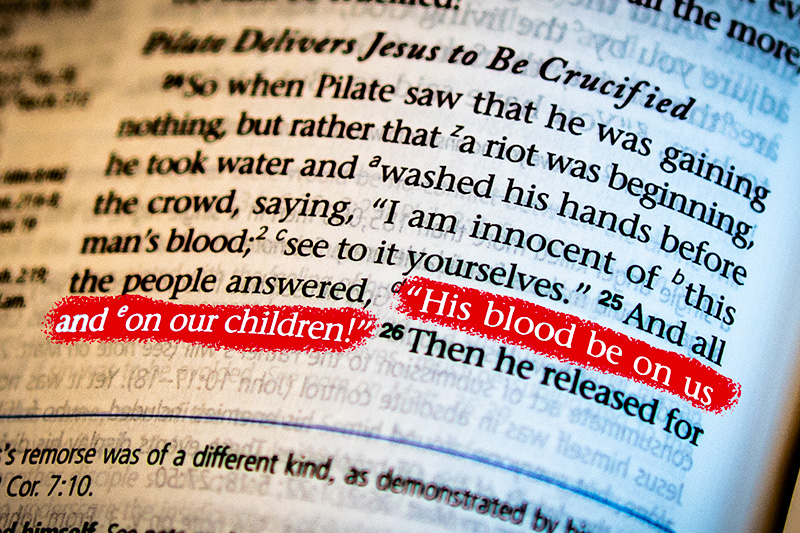
And all the people answered, “His blood be on us and on our children!”
1. Problematic Passages in the New Testament
In Part I of this article on the New Testament and antisemitism, I claimed the following: When the New Testament’s toughest verses are read in the world of Jesus and his Jewish contemporaries, they speak of intra‑Jewish dispute—not of hatred toward the whole people of Israel.
For Part II, I will investigate passages in the New Testament that are often claimed to be antisemitic, and in so doing I will give weight to my claim above. I will look at the original first-century historical context of the words, highlighting the Jewish context, and setting aside for now the many abuses of the texts that came from the minds of antisemitic Gentiles centuries later. Their abuses of these texts, which neglect the original first-century context, are inadmissible evidence concerning their original meaning.
Instead, I will (1) locate each verse in its original historical‑cultural setting; (2) compare its language with contemporary Jewish rhetorical forms; (3) trace its theological function within the NT author’s overall message; (4) note how later Christian misuse differs from the original intent.
2. Matthew 27:25—“[Let] his blood be on us and on our children!”
The most notorious passage in this discussion is arguably Matthew 27:25. It has been used to inspire bitter depictions of Jewish people in art, and it has often been emphasized in passion plays throughout Europe to highlight supposed Jewish complicity in the death of Christ.
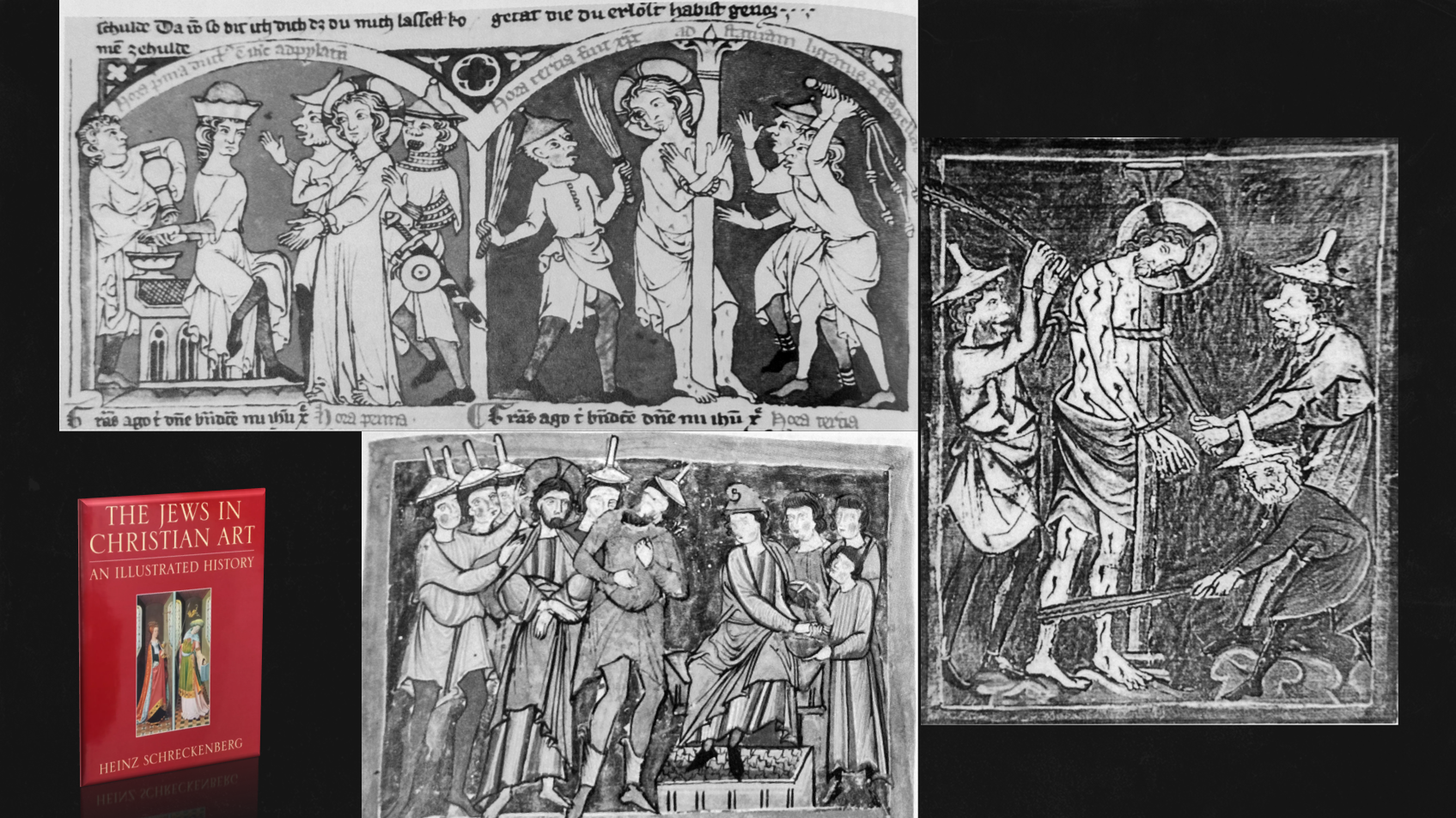
Figure 1 - Christian Artwork Depicting Jewish Complicity in the Crucifixion
The context of the verse is Jesus’s encounter with the Roman governor, Pontius Pilate, as a crowd of Jewish opponents of Jesus looked on from within the Roman Praetorium (the judicial courtyard from which Pilate governed the subjugated Jewish nation). Jesus had been arrested by the temple authorities and turned over to Pilate, who had interviewed Jesus and found no warrant for his execution, which the crowd was demanding. To pacify the crowd and to get himself out of executing Jesus, Pilate forced the crowd to choose between releasing Jesus (whom he thought was innocent) or releasing Barabbas, a notorious criminal who was also in Roman custody. If the crowd chose to release Jesus, then Pilate would not be required to condemn a man he deemed innocent. As the Gospel of Matthew recounts, Pilate’s shrewd ploy failed:
So when Pilate saw that he was gaining nothing, but rather that a riot was beginning, he took water and washed his hands before the crowd, saying, “I am innocent of this man’s blood; see to it yourselves.” And all the people answered, “His blood be on us and on our children!” Then he released for them Barabbas, and having scourged Jesus, delivered him to be crucified (Matt 27:24–26).
Due to his fear of the angry mob, Pilate consented to the crowd’s demands. The crowd proclaimed their agreement with Jesus’s death by accepting his metaphorical blood, or death, upon themselves and their children. The Romans then took Jesus away, mocked him, and crucified him according to Roman methods. Yet, before we elaborate on the meaning and consequences of the saying of the crowd, I must once again lament at how frequently antisemites have abused this verse for more than a millennium. The alleged picture of all Jews as bloodthirsty murderers of God has wrought devastation to Jewish lives and to Jewish-Christian relations. There is no doubt about how this verse was appropriated to justify violence in history, but was that the actual intention of the passage?
First, we need to be specific about who said these fateful words and to whom they therefore apply. Matthew said that “all the people” called for Jesus’s blood upon their heads. Although later Gentile antisemites took this to mean “all the Jews,” the context of Matthew explicitly denies this. Not all Israel was present in Pilate’s Praetorium, where these words were uttered. “All the people” does not include the millions of Jewish people who remained in the Diaspora and were not present in Jerusalem or the Praetorium. Likewise, it would be irrational to believe that the multitude of Jews who eagerly welcomed Jesus to Jerusalem as their king only a week before would have been included in “all the people” who called for the bloodguilt (Matt 21:6–10).[2] It is also impractical and somewhat odd to imagine that all the Jews of Jerusalem could have fit into Pilate’s court. Instead, “all the people” in Matthew’s context means, “all the people who gathered at the Praetorium for Pilate’s ruling on Jesus’ fate.” This would have been limited to several hundred Jewish people at most. Thus, the request to assume bloodguilt for Jesus’s death would have been a request limited to the contemporary generation of Jesus’s Jewish opponents who were at the Praetorium that day and the direct children of those opponents. It does not refer to all Jewish people alive at the time, nor does it refer to all Jewish people across time and space.
It is not without reason that many Christian commentators believe this declaration was a foreshadowing of the events of 70 CE (a generation later, i.e., the crowd’s children) and nothing more.[3] Levine and Brettler agree with this position in their comments above.[4] As a final bit of evidence that the responsibility should only be laid on a limited subset of Jewish people, and not all Israel, consider how another passage in the New Testament book of Acts only lays blame upon “those who live in Jerusalem and their rulers” (Acts 13:27–28; cf. Acts 3:17). In this passage, Paul did not say, “We Jews are corporately responsible for this.”
Second, note that this declaration by the Jewish crowd at the Praetorium used a Jewish figure of speech, giving it authenticity as something that was actually said by a crowd of Jewish people. Having “blood upon one’s head” is a figure of speech found in the Tanakh that means that one has committed an act that deserves one’s death (Josh 2:19; 2 Sam 1:16; 1 Kgs 2:37). By calling for Jesus’s blood to be upon their own heads, the crowd was proclaiming their confidence that Jesus deserved death and that God would exonerate them from the consequences of his killing (cf. Deut 13). It was a sarcastic and, as we will see, ironic statement that God would not account Jesus’s death as murder.
This figure of speech continued to be used in the Talmudic sages’ rhetoric about matters of ritual purity.[5] The biblical and Talmudic examples show the historical plausibility of the crowd’s use of the “bloodguilt” idea, for it had precedence in Judaism. If the people actually said the phrase, then Matthew was reporting it, not inventing it.
Why did Matthew report this saying? In Matthew’s mind, Jesus was not a blasphemer, but rather the prophesied redeemer and Messiah of Israel. If the Talmud’s matters of ritual purity bring bloodguilt upon one’s head, then qal vachomer, how much more does the unjust condemnation of God’s chosen Messiah! If Jesus really was who he said he was, then his execution would have been a grave mistake that brought guilt upon those who supported his execution. As I will explain below, such guilt is removable. It need not be inevitable or without escape, thanks to the mercy and forgiveness of God.
Third, Matthew may have been wanting to draw a parallel between Yeshua’s trial and the trial of the prophet Jeremiah. Like Yeshua, Jeremiah was arrested for his words against the temple (Jer 26:9; cf. Matt 26:61), and Jeremiah was brought before “all the people” of Israel. They condemned him to death in a public trial. However, unlike Yeshua, the prophet Jeremiah made a defense before the crowd, declaring that he was simply speaking the words of the Lord, and that if the people killed him, they would be held accountable. He said, “You will bring innocent blood upon yourselves and upon this city and its inhabitants” (Jer 26:15). After this moving defense, Jeremiah’s opponents backed down, and he was not executed. The scenarios in Yeshua’s and Jeremiah’s trials are strikingly similar. Matthew may have been wanting to explain that Yeshua was suffering the same things as Jeremiah for the same reasons, but unlike Jeremiah, in Yeshua’s case the crowd followed through with their demands.
Table 1 – Jeremiah’s Trial and Parallels with Jesus
Jeremiah (Jer 26) | Jesus (Matt 26—27) |
Arrested for preaching about the destruction of the First Temple | Arrested for preaching about the destruction of the Second Temple |
Opposed by the chief priests and officials | Opposed by the chief priests and officials |
Has a sham public trial in the Temple | Has a sham public trial at the Praetorium |
“All the people” condemn him to death | “All the people” condemn him to death |
Jeremiah defends himself and warns his audience of bloodguilt and the destruction of the Temple | Jesus stays silent. Matthew records the audience accepting bloodguilt. [Does he intend connection with the destruction of the Temple?] |
Jeremiah is freed | Jesus is crucified |
First Temple is destroyed during Jeremiah’s lifetime | Second Temple is destroyed 40 years later |
Thus, I find it highly plausible that Matthew’s motive for accurately reporting the crowd’s saying is that he found it to be an echo of Jeremiah’s trial.
Fourth, the New Testament denies that the crowd consciously knew what they were doing (Luke 23:34; Acts 3:17; 1 Cor 2:8; cf. 1 Tim 1:13). If the crowd agreed with the Sanhedrin (Matt 26:65–66), they thought that they were calling for the execution of a blasphemer, in accordance with Deuteronomy 13. However, according to the New Testament, they were unaware (ignorant) of Jesus’s true identity, an identity that should have exonerated him of the charges. Many of the Jewish people in the Praetorium followed Jesus to his execution location, including the chief priests and the Pharisees. While hanging from the cross, Jesus asked on their behalf, “Father, forgive them, for they know not what they do” (Luke 23:34). If Jesus had this attitude of forgiveness toward Israel’s leaders who were directly responsible for his execution, then (kol vahomer) how much more would it apply to the crowds who had less culpability? Jesus did not want his opponents to be cursed with bloodguilt, but rather, he wanted their repentance and forgiveness. The Apostle Peter makes the same claim of lesser guilt in Acts 3:17: “And now, brothers, I know that you acted in ignorance, as did also your rulers.” This ignorance makes the crowd’s sin a lesser sin which Jesus asks his Father to forgive. Sins committed in ignorance or negligence are always lesser sins than those done with intent (Num 15:30–31; Num. 35:11; Deut 4:42). According to the New Testament, the death of Jesus was not murder, but manslaughter.
Table 2 - Murder Versus Manslaughter in the Torah
Killing with Intention (“High hand”) | Killing in Ignorance (Negligence) | |
Description | Premeditated, planned, and plotted while fully knowing the law and choosing to break it anyway | Unplanned, but happened due to unintentional foolish decision-making or other intentional sins (causing a ripple effect) |
Penalty in Torah | Murder, with death penalty | Manslaughter, with exile penalty |
Examples in Torah |
Finally, there is a beautiful and redemptive thought I must share about Matthew 27:25. The New Testament teaches that Jesus’s death was a good thing that ultimately provided atonement and forgiveness for Israel and the nations. Like the blood of the lamb provided redemption for Israel in Egypt, so too Jesus’s blood provides redemption for those who follow him. As New Testament scholar Craig Blomberg notes, “[P]aradoxically, since Jesus’ blood is shed for the forgiveness of sins, then the crowd’s part in his death ultimately makes available the possibility of their salvation.”[6]
Although the crowd was calling for Jesus’s death with their reference to his blood, it is implied in later passages that some of these very same Jews came to believe in Jesus after his resurrection (Acts 2:36–41). At that point, Yeshua’s blood was not upon their heads to condemn them—no!—but rather to provide redemption from sin, just as the blood of the Passover lamb upon the doorposts brought redemption from death. Ironically, for these Jews in the crowd, their call for Jesus’s blood actually resulted in their own redemption! A similar picture of preserving the nation from death can be heard in Joseph’s remarks to his brothers about their attempt to kill him: “You meant evil against me, but God meant it for good, to bring it about that many people should be kept alive” (Gen 50:20).
I do not deny that later Christians used this passage as fuel for antisemitism against the entire nation of Israel, nor am I insinuating it should be used against a portion of the people of Israel at any time. I do believe that the historic Christian understanding of the passage has been deeply flawed. Once properly investigated according to the original historical context of the verse, this passage can no longer be used to assign bloodguilt to Jewish people for being Jews.
3. Matthew 23—“You hypocrites, brood of vipers, and murderers of the Prophets”
Unlike the previous passage, which included words from a crowd at Jesus’s trial, this passage contains the words of Jesus himself. Matthew 23 is a hard-hitting, deadly serious denunciation of the Pharisees, one of the Jewish sects that put considerable pressure on Jesus and opposed his message. Even though many Pharisees were opposed to Yeshua’s message, Jesus actually had much more in common with the Pharisees than is usually recognized. In a variety of theological matters, Jesus would have sided with the Pharisees against the Sadducees, Qumran covenanters, and the Samaritans—the other prominent first-century Jewish sects.[7]
It is most likely because Yeshua had such high expectations of religious leaders—especially those who taught the people—that the words we have in Matthew 23 are severe. Chronologically, this exchange was set in the week before Yeshua’s crucifixion, and Matthew portrayed him as prophetically knowing that he was about to be killed. In this highly charged context, Yeshua minced no words. He called the Pharisees “hypocrites,” “child[ren] of Gehenna,” “blind guides,” “whitewashed tombs,” “serpents,” “brood of vipers,” and “sons of those who murdered the prophets.” In the midst of his criticism, Yeshua called the Pharisees to stop neglecting the weightier matters of the Torah, including justice, mercy, and faithfulness (Matt 23:23), a theme of the prophets of the Tanakh (Hos 6:6; 1 Sam 15:22).
Jesus’s aggressive, condemning stance may shock many who have a more benign or soft image of him. Can he be released from the charge of antisemitism?
First, Jesus spoke against the Pharisees, not all Jewish people. The claim that Jesus condemned all Jews is false. That claim has embedded within it several faulty jumps of interpretation. In the context of the first century, the Pharisees were merely one Jewish sect among many. Jesus did not say, “You Jews, you brood of vipers,” but rather, “You Pharisees,” a subset group. Thus, Jesus’s rhetoric concerned party lines: ideology, theology, and practice, not peoplehood. One must equate “all Jews” with “Pharisees” in order to support the antisemitism charge—a lamentable equation. It was no sin to be a Pharisee, as even Paul and other Jewish believers in Jesus remained Pharisees after they came to follow Jesus (Acts 15:5; 23:6). Jesus’s rhetoric was against those particular supporters of the Pharisees who rejected him in the years 30—70 CE. And even within that harsh rhetoric, Yeshua mourned for the people of Jerusalem and for her repentance:
O Jerusalem, Jerusalem, the city that kills the prophets and stones those who are sent to it! How often would I have gathered your children together as a hen gathers her brood under her wings, and you were not willing! See, your house is left to you desolate. (Matt 23:35–38)
There is no textual indication that the invective of the chapter may be universalized beyond Yeshua’s generation to all subsequent Jews. Instead, Jesus focuses his rhetoric against “this generation” (Matt 23:36). Blomberg comments,
The qualification “this generation” should also warn us against the tragic abuse of this verse by many throughout church history who have not limited Jesus’ words to the generation of A.D. 30–70 and have thus condemned Jews of all subsequent eras as well.[8]
Even if the chapter’s rhetoric could apply after 70 CE, inasmuch as a Jewish person acts mercifully and justly and does not reject the message of the prophets as highlighted by Jesus, that Jewish person would not fall under Jesus’s line of attack.
Second, Jesus attacked the Pharisees’ approach to religion, not Judaism itself. In the midst of Jesus’s criticisms of the Pharisees, he affirmed a wide variety of Jewish religious observances:
- Public reading of the Torah from “Moses’ seat” in the synagogues (vv. 2–3)
- The use of tefillin/phylacteries and fringes on garments (v. 5)[9]
- Participation in feasts and synagogue life (v. 6)
- Making Jewish proselytes (v. 15)
- The binding nature of oaths (vv. 21–22)
- The goodness of tithing one’s harvest (v. 23)
- The validity of cleanliness laws (vv. 26–27)
These topics cover a wide variety of actions in a Jewish lifestyle, all reflected in Talmudic tractates. Jesus was not denying the validity of the Jewish religion or laws. Rather, he was criticizing the Pharisees for not living up to the Judaism they professed. The general trajectory of Jesus’s words in verses 2 to 28 was that the Pharisees outwardly did good things, but they sabotaged themselves and the Jewish people because they neglected justice, mercy, and faithfulness (Matt 23:23).
The Pharisees were teachers of Torah and religious leaders in Israel; therefore, for Jesus, they had a serious responsibility to model Torah. Likewise, Jesus said, when they fail to model Torah and thereby lead others astray, they deserve chastisement (cf. Ezek 34).
Do we not do this when we believe our leaders have failed us? If our president does not live up to the party platform, or if our children’s teacher does not teach the curriculum, should we not criticize them for leading others astray?
Third, Jesus’s denunciations fit the Deuteronomic themes established by Moses, and he included hope as well. As we saw in Part I, Deuteronomy’s themes formed the historical and redemptive worldview of the authors of the New Testament. This was true of Jesus as well. The New Testament portrays Jesus as the greatest prophet, so it should not surprise us if he followed in the footsteps of the themes laid out by his predecessor, Moses.
However, there is a modification I must make in the case of Matthew 23. As discussed above, Jesus does not condemn the entire nation of Israel in this chapter, but rather a subset of the Pharisees, a group of religious leaders in Israel. Deuteronomy had no subset in mind, but rather warned all Jews in the covenant. Consequently, I have modified the themes in the chart to reflect the more limited scope of Jesus’s denunciations in this chapter. Also, I have included passages from Matthew 24 (part of the same lecture) that show the redemptive hope that Jesus offered to those who listen to him as Israel’s greatest prophet.
Table 3 - Matthew 23–24 and Deuteronomy’s Themes
The Six Features from Deuteronomy | Examples from Matthew 23—24 |
1. The Pharisees’ rebellion and disobedience as a group is ongoing | |
2. God warns the Pharisees through the prophets | |
3. The Pharisees reject the prophets and continue to act in rebellion | |
4. God is justified to bring wrath upon the Pharisees for disobedience | |
5. The Pharisees have opportunity to repent of sin amidst God’s wrath | |
6. Repentance restores the Pharisees to blessing and the land |
As I have explained above, if Jesus deserves to be called an antisemite on the basis of Matthew 23, then so do Moses and the prophets.
Fourth, Jesus was justified in accusing Israelites of murdering their prophets. The one place in Matthew 23 where Jesus went beyond condemning the Pharisees was when he addressed Israel’s role in the murder of her prophets (vv. 29–36). Jesus claimed that the Pharisees shared in the guilt of their fathers, and even exceeded that guilt, by their zeal to kill Jesus and the prophets.
This may strike many modern readers as a hollow and baseless accusation. When we read the Tanakh, we do not learn how Isaiah, Jeremiah, or Ezekiel died. Likewise, we do not know the fates of most of the Nevi’im. Was Jesus just making up an unfounded accusation, libeling Jews with murder charges like Catholics would do centuries later?
No, he was not. While the canonical Jewish Scriptures do not share details about the deaths of the prophets, we do have canonical hints that Israelites murdered them (1 Kgs 19:10; 2 Chr 24:20–21). For example, the Great Assembly confessed, “Nevertheless, they [Israel] were disobedient and rebelled against you and cast your law behind their back and killed your prophets, who had warned them in order to turn them back to you, and they committed great blasphemies” (Neh 9:26). Extrabiblical Jewish accounts describe the murders of the prophets in detail; most famous is the Jewish tradition that King Manasseh ordered the Prophet Isaiah to be sawn in half.[10] Moreover, Jewish tradition reports Jeremiah responding in this manner when he was appointed by God to be a prophet:
O Lord, I cannot go as a prophet to Israel, for when lived there a prophet whom Israel did not desire to kill? Moses and Aaron they sought to stone with stones; Elijah the Tishbite they mocked at because his hair was grown long; and they called after Elisha, ‘Go up, thou bald head’—no, I cannot go to Israel, for I am still naught but a lad.[11]
Indeed, two ancient Jewish sources and a church father indicate that Jeremiah perished by being stoned by his people.[12] Ancient sources indicate that Israelites killed Ezekiel[13] and Amos.[14] The Talmud (b. Gittin 57b) reports the people of Jerusalem admitting about Zechariah, “This one was a prophet among us, and he rebuked us on account of matters having to do with Heaven. We ganged up against him and killed him. And lo, for many years his blood has not come to rest.”[15]
Jesus refers to this pattern of Israel killing her prophets during his confrontation with the Pharisees. The Torah requires Israel to test a prophet and execute him if he turns out to be a false prophet (Deut 13; 18:20–22), but Jesus was saying that Israel had poorly decided between true and false prophets in the past. Jesus claimed to be a true prophet, and ironically, the Pharisees wanted to kill him like their fathers killed prior true prophets. Jesus said that such poor judgment would merit extreme bloodguilt, resulting in the destruction of Jerusalem (Matt 23:35–39).
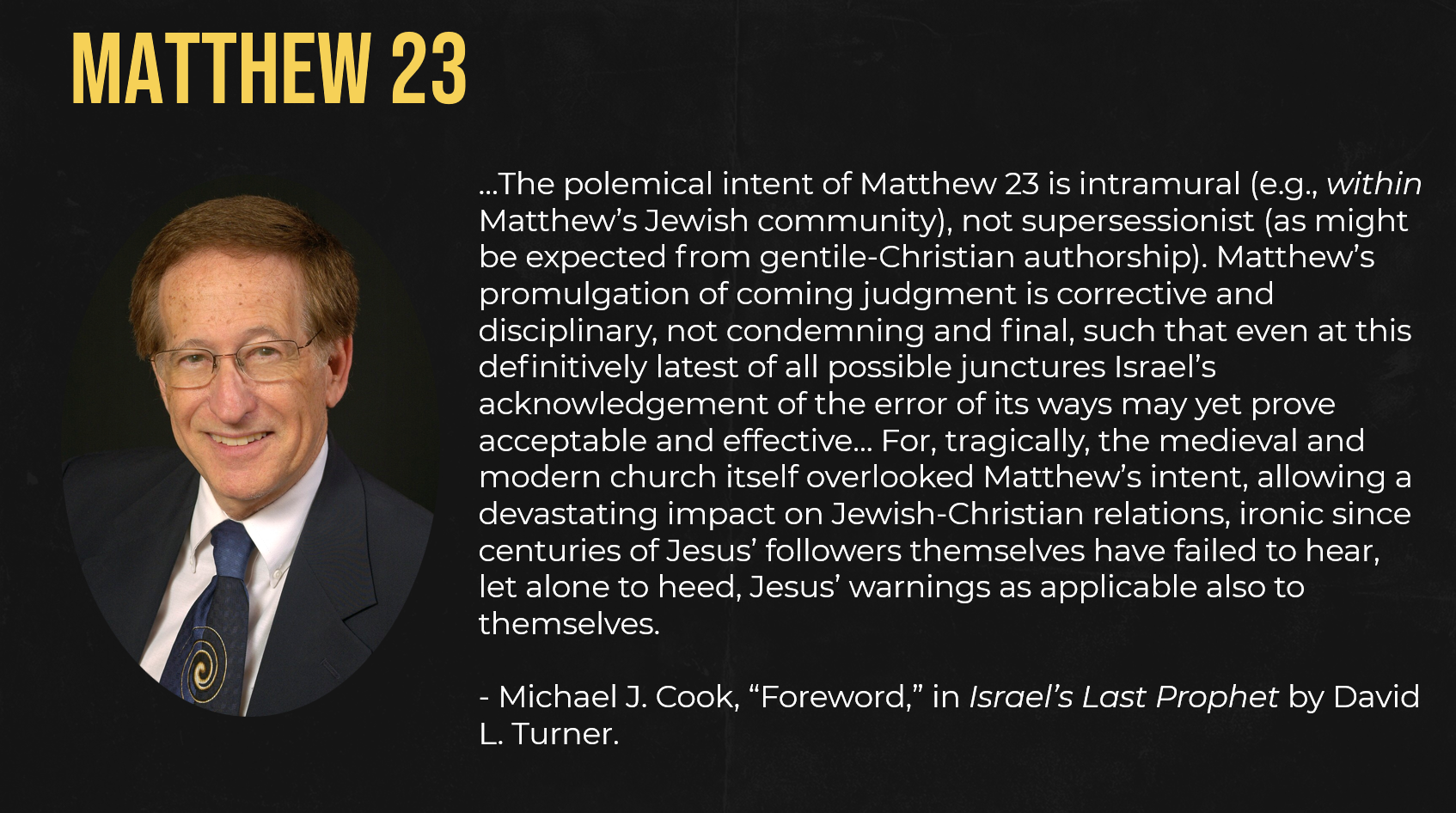
Figure 2 - Michael J. Cook on Matthew 23
Agreeing with my analysis, Rabbi Michael Cook of Hebrew Union College cites another scholar’s work on Matthew 23 approvingly, stating,
…[T]he polemical intent of Matthew 23 is intramural (e.g., within Matthew’s Jewish community), not supersessionist (as might be expected from gentile-Christian authorship). Matthew’s promulgation of coming judgment is corrective and disciplinary, not condemning and final, such that even at this definitively latest of all possible junctures Israel’s acknowledgement of the error of its ways may yet prove acceptable and effective… For, tragically, the medieval and modern church itself overlooked Matthew’s intent, allowing a devastating impact on Jewish-Christian relations, ironic since centuries of Jesus’ followers themselves have failed to hear, let alone to heed, Jesus’ warnings as applicable also to themselves.[16]
Ultimately, the final verdict on this chapter must be dependent upon the identity and character of Jesus. If Jesus was not who he said he was, then Matthew 23 is just one man’s angry opinion, similar to other Jewish rhetoric of the era, but an opinion that has weight only because of Jesus’s popularity. However, if Jesus was a true prophet, sent by God, then he had every right to deliver this message of condemnation for hypocrisy using his strong rhetoric, just as the Hebrew prophets once did.
4. The Gospel of John and “The Jews”
The writings of Yohanan, the disciple of Jesus commonly known in English as John, were written in an era later than the other passages in this article. John most likely wrote his Gospel, his epistles, and the book of Revelation in the 90s CE, decades after the other books of the New Testament were composed. At this point, John was an old man and the rest of Jesus’s disciples had been martyred for their faith. John had also witnessed an increasing hostility between Jews who did not believe in Jesus and those Jews and Gentiles who did. In other words, John was writing in the middle of a contentious era in which he could predict the trajectory of the two communities, and he vehemently disagreed with the direction that Jewish nonbelievers in Jesus were headed.
Additionally, the destruction of the Second Temple in 70 CE by Rome had only intensified the soul-searching in the Jewish community that survived. Preserved in the Jewish writings of late first century CE are cries of anguish about why God would allow (or even direct) the destruction of Jerusalem and the exile of so many Jewish people from the land of promise. One account blames the priests for being false stewards of their authority (2 Baruch 10:18). Another blames the nation for receiving the Torah but not observing it (4 Ezra 7:72). Josephus blames the foolish Zealots for not heeding biblical prophecy (Wars 6.310–15). Rabbi Yochanan ben Torta, a contemporary of R. Akiva a generation later, claims that Israel had observed the Torah but had loved money and hated one another (t. Menahoth 13:22). These brief vignettes illustrate how Jewish authors in the immediate post-temple era struggled with understanding who was responsible for the loss of the temple and Jerusalem.[17]
All of this is necessary context because the Gospel of John has sometimes been called the most antisemitic book of the New Testament. Of particular note are John’s frequent references to “Ioudaioi” as opponents of Jesus’s message, a Greek word that is only sometimes correctly translated as “the Jews” (see below). Michael Cook in Modern Jews Engage the New Testament counts thirty-nine uses of “the Jews” (Ioudaioi) in the Gospel of John that have hostile overtones.[18] He writes, “John’s positioning of Jesus over against ‘the Jews’ has so fueled Christian antisemitism that John has been labeled the ‘father of anti-semitism’ and his Gospel one of ‘Christian love and Jew hatred’!”[19] Another problematic passage is the claim that “the Jews” have the devil as their father (John 8:44). These are admittedly tangled problems to untie. I will first consider John’s use of the term “Ioudaioi” and then, in the following section, I will discuss the troubling passage about the devil.
4.1. Problems of Definition for “Ioudaioi”
Cook notes how the Gospel of John lacks a precise definition of “the Jews” which he sees as present in the other Gospels. Whereas Matthew, Mark, and Luke refer to the chief priests, scribes, elders, Pharisees, Herodians, and Sadducees as Jesus’s enemies, the Gospel of John usually only describes Jesus’s enemies as “Ioudaioi.”[20] Because John uses this designation so broadly, it often takes the mind of an astute interpreter to distinguish the different groups and connotations that John intended. A lazy or impatient reader will most likely miss the nuances.
The term “Ioudaioi” is employed in at least three different senses in the Gospel of John:
- A national sense, referring to the covenanted nation of Israel and all the individuals included therein (John 2:13; 3:1; 5:1; 6:4; 7:2; 19:40).
- A geographical sense, referring to those who inhabit the Judean region (John 7:1; 11:7–8, 11:54).
- A leadership sense, referring to the leaders of Israel (John 5:10; 7:13; 9:22; 18:31).
First, in light of this, when reading the Gospel of John, we must consider which sense of the word John intends in each use of the word “Ioudaioi.” The sense depends upon the context, so we cannot make blanket statements about any particular passage without due diligence. Sometimes the word is best translated as “Judeans” or “Judean leaders” rather than “the Jews,” to be determined by context. For this reason, modern translations of the New Testament often translate the word “Ioudaioi” as something other than “the Jews.”
Second, we need to recognize that John’s use of “Ioudaioi” was not uniformly negative. Besides determining the sense of the word, we must also determine whether John intended the sense to be positive, negative, or neutral.[21] The most famous positive statement is when Jesus tells a Samaritan woman, “Salvation is from the Jews” (John 4:22). This, in itself, is a polemic statement against the woman’s Samaritan religion, which was a schismatic half-Jewish religion that still exists today. Jesus uses the word “the Jews” to import the idea of an entire religion and way of life and redemption that he believed was from God and was found only among the people of the covenant. There is no higher affirmation of “the Jews” than this. Surely John would not have included this affirmation if he intended to paint all Jews or Judaism as evil.
Third, we need to recognize that John spoke positively of Jews outside of those whom he called “Ioudaioi.” It is a mistake to assume that John is hostile to all Jews as a people. Jewish New Testament scholar Adele Reinhartz describes how John was not against Israel as a nation but a subset of that nation: “It is striking that hoi Ioudaioi [‘the Jews’ in Greek] is never used to describe the disciples [of Jesus] and other followers, who are certainly Jewish with regard to their religious and ethnic origins…. Instead, the Gospel uses ‘Israelite’ and ‘Israel’ as positive terms.”[22] Reinhartz cites multiple passages to support this distinction.[23] Thus we see a linguistic and rhetorical divide in the Gospel of John. John often uses the word “Ioudaioi” when speaking negatively against a subset of Jews and he used the term “Israel” in a more positive light, often of Yeshua’s Jewish followers. In both cases, John was referring to ethnic descendants of Jacob, but, for a variety of reasons, he predominantly uses one term with negative connotations and the other with positive connotations.
I believe there is a plausible explanation to explain this linguistic feature. Along with Reinhartz, Cook notes the different treatment of Jesus’s Jewish disciples and Jesus’s Jewish opponents, and he combines that insight with John’s stated purpose for writing his Gospel. In John 20:31, John says that he wrote his account of Jesus’s life and works “so that you may believe that Jesus is the Messiah, the Son of God, and that by believing you may have life in his name.” For John, the key differentiator within the nation of Israel is belief in Jesus. Thus, John mentions “belief” and related terms almost 100 times.[24] John designates Jewish believers in Jesus as “Israelite” or “disciple” whereas he often designated Jewish nonbelievers in Yeshua as “Ioudaioi.” Cook writes, “‘The disciples’ model those who believe despite all discouragement, while ‘the Jews’ model those who disbelieve in the face of all compelling evidence.”[25] So, simplistically speaking, belief in Jesus was the defining line between “Jewish people John approved of” and “Jewish people John opposed,” but John rarely used the term “Ioudaioi” for the Jewish people he approved of. Why?
4.2. A Coherent Reason for the Rhetoric
The most plausible explanation that addresses the nuances described above depends upon a historical reconstruction of the relationship between Jewish believers in Yeshua and their non-Yeshua-following Jewish brethren in the first century. It is possible that the leaders of many synagogues in the late first century were posturing themselves as “the true Jews,” while labeling Yeshua’s followers as heretics. John’s Gospel may be using his opponents’ preferred designation (“Jews”) in such a way that portrays Yeshua’s Jewish followers as the true followers of God. He also may have picked this title to reflect the Judean geographical origin of the leadership that opposed Yeshua, hinting at the loss of the Judean way of life in 70 CE, which he believed was the Jewish authorities’ fault.
The Gospel of John claims that Jewish religious leaders had privately agreed to expel Yeshua’s followers from the synagogues if they were found out (John 9:22; 12:42), and John records Yeshua’s prophecies that the expulsions would worsen after his death (16:2). Matthew speaks of punishments that would be inflicted upon Yeshua’s followers from within synagogues (Matt 13:9), and Paul appears to have suffered this kind of discipline (2 Cor 11:24). Luke also records Yeshua’s prophecy about a future period when his followers would be reviled and excluded (Luke 6:22). In the 50s CE, Paul was expelled from synagogues in the Asia Minor region, near where John lived in the 90s (Acts 13:44–50; 14:5; 14:19). All these accounts give plausibility to the idea that Jewish believers in Yeshua found much opposition from within synagogues at a very early period. University of Manchester rabbinic scholar Philip Alexander writes,
It is abundantly clear from the New Testament itself that [Yeshua’s followers] before 70 not only attracted support but also encountered strong and widespread opposition within the Jewish community. That opposition ranged from central authorities in Jerusalem (the High Priest and the Sanhedrin) to the leaders of the local synagogues. It extended from Palestine (both Galilee and Jerusalem) to the Diaspora (e.g. Asia Minor and Achaea). It began in the time of Jesus himself and continued unabated in the period after the crucifixion.[26]
Also, the Talmud records that the Birkat Ha-Minim prayer was composed in Yavneh, an ancient Israeli town between Jaffa and Ashdod, around 80 CE (b. Berachot 28b), although this early dating is disputed. This curse against heretics was added to the Eighteen Benedictions, also known as the Amidah, and is prayed in Orthodox shuls to this day. In 1898, the late scholar and rabbi Solomon Schechter discovered an early version of the blessing in the Cairo Genizah,[27] and its text differed from the common text used today. The early version pronounced a curse upon “Nazarenes” (cf. Acts 24:5), and ever since, scholars have been arguing about whether a first-century version of the curse included believers in Jesus.
Although we cannot pinpoint the curse’s origin with any certainty, the curse was present in a mature form by the fourth century and is mentioned in detail by the church fathers Epiphanius and Jerome.[28] There may be earlier evidence in Justin Martyr’s second century remarks about Christians being cursed from within synagogues[29] and emissaries being sent out from Jerusalem to warn against Jesus’s followers.[30] However, a late-first-century confirmation of the Birkat eludes us; even John does not mention it.
Thus, there is no consensus on the original curse’s wording, dating, or when Jewish believers and Gentile Christians became targets of the curse. We do not know if it was present within the synagogues of Judea and Asia Minor by 90 CE, roughly the time when John wrote his Gospel. However, if the Talmud’s dating of the curse is correct, it is possible, even probable, that John would have been aware of the synagogue curse. Also, the evidence from Justin Martyr about curses in synagogues is especially relevant, especially since Justin wrote within a generation of the apostle John’s death, and he wrote from Asia Minor, where John spent his final years.
Although we do not have a clear picture on the dating of the Birkat Ha-Minim or whether it has any relevance to the Gospel of John, when we combine this uncertainty over the curse with our certainty about earlier Jewish-Christian conflicts in the synagogues, a compelling picture emerges. We can plausibly conjecture what these struggles in the synagogues would communicate to Jewish believers in Yeshua: They would have encountered significant opposition while worshipping in the synagogues, such as when the Apostle Paul was subjected to thirty-nine lashes multiple times by religious leaders (2 Cor 11:24; cf. Deut; 25:3).
In the early battle between Yeshua’s Jewish followers and Jewish opponents of Yeshua, one side was gaining the upper hand within the synagogues: Yeshua’s opponents. They used synagogue attendance (John 9:22; 16:2) and even synagogue services (Justin) as weapons to draw a line that excluded Yeshua’s followers. Eventually, the animosity was formalized with the Birkat Ha-Minim that is present in the Siddur today.
The Jewish people on the inside of the circle declared that they were true Jews and the heirs to true Judaism. The Jews newly found on the outside—Yeshua’s followers—responded rhetorically by adopting alternative names for themselves: Israelites, Nazarenes, and Ebionites.[31] The word “Ioudaioi”—even though it ethnically described everyone in this debate[32]—had become a supercharged and highly-divisive term that Yeshua’s opponents embraced while simultaneously denying its use to describe Yeshua’s Jewish followers.
John wrote his Gospel in the midst of this upheaval of Jewish self-definition, and he correctly predicted that the use of the word “Ioudaioi” was becoming trademarked by Jewish opponents of Yeshua. Thus, for the most part, as a rhetorical device, he ceded the use of the term to Yeshua’s opponents. This theory explains why John so often used the term with a negative connotation and why he never described Yeshua’s followers as “Ioudaioi,” even though they were ethnically Jewish themselves. To do so would have blurred the lines between Jewish Yeshua-followers and Jewish Yeshua-opponents that had grown increasingly distinct by John’s time.[33]
When we contextualize the Gospel of John into its first-century setting, the charge of antisemitism does not hold true. Jon Weatherly, a professor of New Testament, affirms our thesis that the Gospel writer was not referring to all Jews:
John clearly did not intend to represent all Jews as unbelievers; those expelled from the synagogue for their belief in Jesus were themselves Jews. John’s use of “the Jews” thus indicates an intense theological conflict between [Jewish] Christians and non-Christian Jews, but it does not indicate that the writer regarded all Jews as evil and unbelieving.[34]
Michael Cook similarly contextualizes John. He warns his fellow Jewish readers against thinking that John is antisemitic:
John’s purpose is to advance a theological proposition, which is the need for belief in the Christ. In so doing, he requires two role models: one of choosing disbelief, to be eschewed by his readers; and the second of choosing proper belief, to be emulated by his readers…. If Jewish readers divide their attention between Jesus and the Jews, they are likely to overstate the conflict motif and see John primarily in terms of anti-Jewish polemic.[35]
And yet, “overstating the conflict motif” and seeing John as an opponent of all Jews is exactly what has occurred in the history of the interpretation of John. Sadly, later generations of Gentile Christians, totally unaware of the Jewish familial and theological conflict reflected in the Gospel of John, misread John’s rhetoric through the lens of “Jews-as-a-people versus Jesus,” rather than “Jewish non-believers in Yeshua versus Jewish believers in Yeshua.” Because they believed that Jesus’s harsh words in John were directed at all Jews, Gentile Christians maintained they had theological warrant to disdain all Jewish people throughout the centuries. I deeply lament that this Gospel has been appropriated for hate.
5. John 8:34–47—“You are of your father the Devil”
At Chosen People Answers, we affirm the chosenness of the Jewish people by the God of Israel, who continues to have good purposes and plans for the nation of Israel at the present time, and in the future through the grand spiritual and physical restoration of the nation to her Messiah and her land. When we look at Israel, we say, “chosen by God.”
Yet when many Christians have looked at Jews throughout the past twenty centuries, they have completely inverted the sentiment. They have decided that Jews are not “chosen by God,” but are rather “children of the devil.” Gone are the feelings of hope and confidence that the Lord is blessing Israel. In the eyes of some Christians, all that is left is diabolical condemnation.
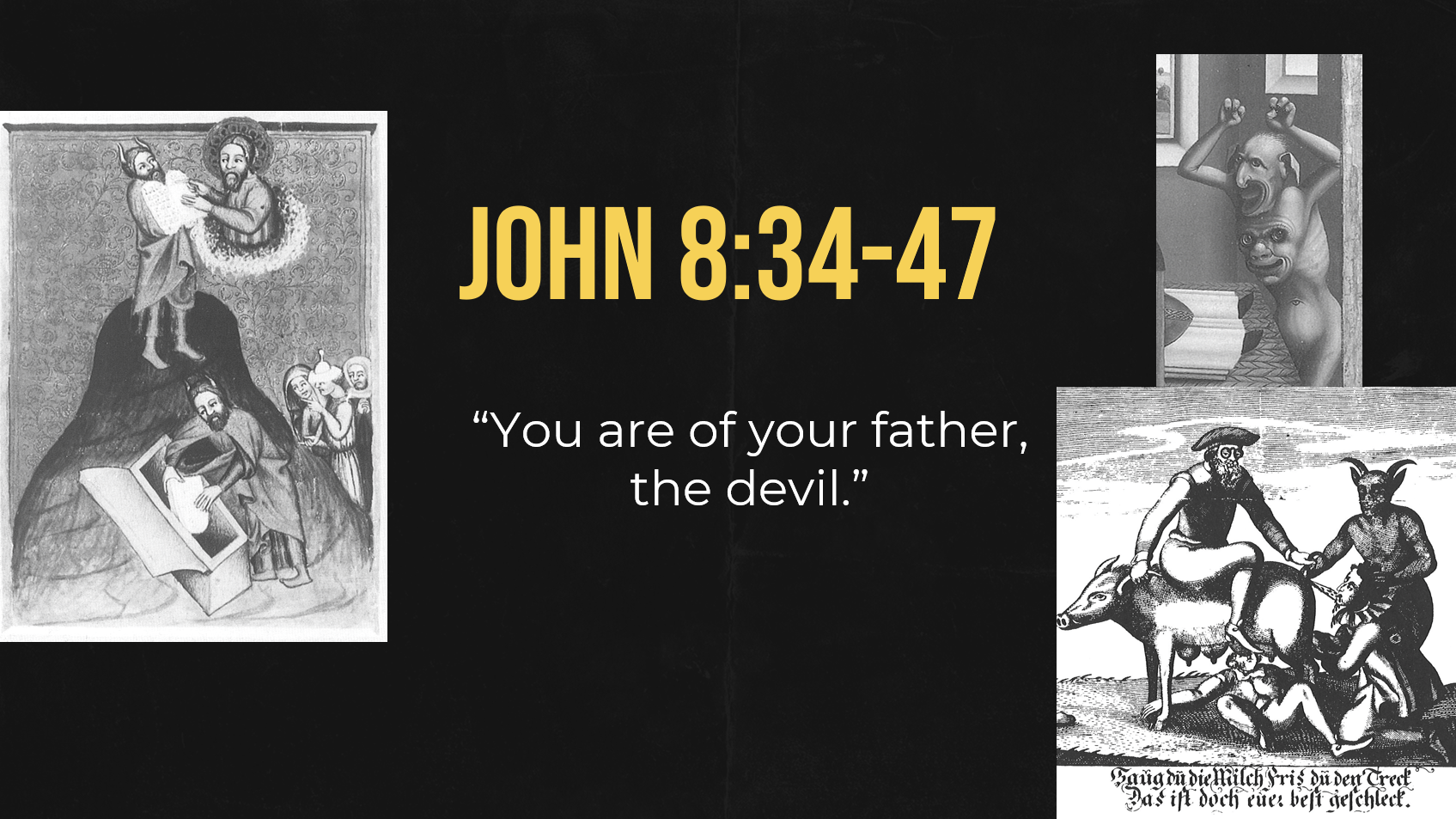
Figure 3 - Antisemitic Christian Depictions of Jews as devils and/or with horns
If asked where this sentiment comes from, antisemitic Christians may appeal to John chapter 8 and say, “Jesus called the Jews children of the devil, so that’s what they all are!” From this misreading of the text, Christian artists and playwrights have let their imaginations run wild in depicting Jews as devilish, demonic, horned creatures, inciting hatred of the Jewish people.[36] Please let us be clear: We condemn this assertion and these depictions fully.
The antisemitic reading of Jesus’s words in John 8 is based on a fundamental misunderstanding of God’s relationship with Israel. If we think that Jesus was kicking Jews out of God’s family based on John’s teachings, then we would think likewise when similar statements are made against Israel in the Tanakh. The Tanakh unambiguously calls Israel the children or sons of God (Exod 4:22; Jer 31:9; Hos 11:1; Isa 64:8), but listen to what Moses said in Deuteronomy 32:5: “They [Israel] have dealt corruptly with him [God]; they are no longer his children (לֹא בָּנָיו) because they are blemished; they are a crooked and twisted generation.”[37] If we think that Moses was kicking Jewish people out of their covenantal relationship with their Heavenly Father in this passage, then those other passages make no sense. Something is missing in this analysis, and we propose it is this: Ontological sonship must be distinguished from ethical sonship.[38] The antisemitic reading does not do so.
5.1. Distinguishing Different Kinds of Sonship
Ontological sonship refers to a state of having a father in an irrevocable way such that it is part of your very being. This can be illustrated in the case of physical versus adopted fathers. Although different men can adopt an orphan, the orphan can never have a different physical father. Ontological sonship refers to a person’s permanent, inherent nature that cannot be changed. It is a non-degreed property: a person is either another person’s ontological father, or he is not. There is no middle ground.
The adopted orphan has a different kind of sonship relationship with his adopted father: a contingent sonship. The adopted son gains a new non-biological father, while retaining his ontological father, since ontological relationships cannot change.
This must be distinguished from ethical sonship, which refers to bearing a lifestyle resemblance to a father-figure who may or may not be one’s ontological or contingent father. For example, one can look up to a rabbi as a father figure, and to the extent that the student resembles the rabbi in his speech and actions, the student can be said to have an ethical sonship relationship with his mentor. Unlike the other two categories, this kind of sonship is a degreed property: one can share more, or less, resemblance to one’s mentor than another person, and one can even grow in ethical resemblance over time through changes in one’s life.
Table 4 - Three Kinds of Sonship
Ontological Sonship | Contingent Sonship | Ethical Sonship | |
Example | Biological father-son relationship | Adopted son’s relationship with adopted father | A mentee’s relationship with a mentor |
Category | Ontological (one’s being: like produces like) | Relational (treating one as if one is an ontological son) | Ethical (one’s lifestyle correspondence with the mentor) |
Status | Permanent, immutable | Changeable, based on father’s choice | Changeable, based on mentee’s choice |
Modal status | Non-degreed property (either/or) | Non-degreed property (either/or) | Degreed property (on a spectrum) |
Antisemites miss that John 8 refers to multiple types of sonship, and that Jesus only has one type of sonship in mind when he tells his opponents, “You are of your father the devil” (John 8:44). Unfortunately, as we have seen throughout this article, antisemitic readings of the New Testament are often simplistic, inconsistent, and ignorant. The same holds true in this passage.
John 8:12–59 is an extended confrontation between Yeshua and a crowd of Jewish worshippers who have come to Jerusalem to celebrate Sukkot (John 7:2, 37). Yeshua stands up to teach the crowds in the area of the treasury in the temple (John 8:20), and many in the audience believe him (John 8:30–32), while some do not. The crowds who reject him grow increasingly bold in their accusations against Yeshua, and he responds in kind with accusations against them. He does so by speaking in a series of dichotomies:
- I am light/you are in darkness
- I am not of this world/you are of this world
- I set you free/you are enslaved
- My father/your father
Yeshua intends to depict the stark contrast between himself and his opponents with each of these dichotomies, calling them to repent of their ways and believe in him. From verse 32 onwards, the tension deepens until the climax, where Yeshua’s opponents pick up stones to throw at him. Yes, this is a very heated and confrontational chapter about Yeshua’s identity and the identity of his opponents.
In the middle of this debate, the two sides spar about who “the father” of the opposing side is. Yeshua’s opponents claim that their father is Abraham (John 8:33)—a notion that Yeshua agrees with on one hand (ontological sonship) but disagrees with on the other (ethical sonship). This is where the antisemitic interpretation loses all credibility. The antisemitic interpretation does not know how to handle Yeshua affirming their lineage, “I know you are offspring of Abraham” (v. 37) and that their father is truly Abraham (v. 56). Yeshua affirms the ontological descent of his opponents from Abraham! He affirms that they are human beings descended from the great patriarch with whom God made an eternal covenant. On an ontological, unchangeable level, they are the chosen people through covenant! (cf. Rom 11:29)
It is important to be precise about what kind of fatherhood Yeshua was speaking about in this passage. As can be seen in this table, the passage reflects several types of sonship relationships:
Table 5 - Sonship in John 8
Ontological Sonship (Being) | Ethical Sonship (Resemblance) | |||
Human Sonship | Divine Sonship | Living like Abraham | Living like God | |
Yeshua’s opponents | From Abraham (vv. 37, 56) | Chosen as Abraham’s sons | Do not resemble Abraham (vv. 39–40) | Not of God (v. 47) |
Yeshua | (not present in John 8) (see John 2:1; Matt 1) | From his heavenly Father (vv. 18, 23) | Abraham resembles Yeshua (v. 56) | Those who know Yeshua know the Father (v. 19) |
Yeshua is not focused on the ontological question of his opponents’ fatherhood; he affirms that they are descendants of Abraham. Elsewhere in the New Testament, all Israel’s ontological sonship under God is affirmed (Rom 9:4). Instead, Yeshua spends his time criticizing his opponents about their lack of ethical resemblance to Abraham and God, whom they claim to have as their fathers. Yeshua condemns his opponents for not imitating God’s ways or walking righteously as Abraham walked. Although they are ontologically descended from Abraham, and had been chosen spiritually as a firstborn son (Exod 4:22), they are not living up to their identity.
A Jewish religious leader, such as Yeshua, may legitimately question if Jewish people follow Abraham’s ethics, as this is topic also discussed by Talmudic sages. In a discussion about the mixed multitude that came out of Egypt, the sages explain how one could tell who was descended from Abraham and who was not: ethical sonship. R. Shabbetai b. Marinos says, “Anyone who has compassion for others is [through his actions] known to be of the progeny of Abraham our father. But anyone who does not show compassion to others is known not to be of the progeny of Abraham our father” (b. Besah 32b). Commenting on this passage, Rabbi Joseph Telushkin, a modern-day rabbi, writes, “Sadly, one sometimes meets Jews who, according to this definition, are certainly not spiritual descendants of Abraham.”[39]
Yeshua is making the same distinction. Yeshua affirms that his Jewish opponents are ontological sons of Abraham, but he denies that they resemble Abraham because their actions are sinful. When the conversation shifts to whether the opponents have God as their Father, Yeshua denies it because they had rejected the gift the Father had sent them. “If God were your Father,” Yeshua says, “you would love me, for I came from God and I am here” (v. 42). In other words, God loved Yeshua and sent him to Israel, but Yeshua’s opponents do not recognize that he had been sent from God. God approves of Yeshua; his opponents disapprove of him. This is a fundamental break between God and Yeshua’s opponents. Yeshua concludes that his opponents had estranged themselves from their ontological Father, thereby ceasing to resemble him. They retain God as their father in one sense (Exod 4:22), while turning their back on him in the most important sense.
It was in this context that Yeshua turns the tables on his opponents. If his opponents do not resemble Abraham or God in their actions, then whom do they resemble? Yeshua answers,
You are of your father the devil, and your will is to do your father’s desires. He was a murderer from the beginning, and does not stand in the truth, because there is no truth in him. When he lies, he speaks out of his own character, for he is a liar and the father of lies (v. 44).
By this point, it should be apparent what kind of devilish descent Yeshua is accusing his opponents; it is not one of ontology, but rather the ethical resemblance of mind, will, intention, and action. New Testament scholar Stephen Motyer agrees, “The charge is ethical, not ontological.”[40] By opposing Yeshua (who was approved by God) and seeking to kill him, Yeshua’s opponents act from the devil’s playbook, who opposes God. There was a likeness in purpose and action between God’s opponent and Yeshua’s opponents, and Yeshua makes the comparison explicit. Yeshua had done this on one other occasion when he told his own disciple, Peter, “Get behind me, Satan!” (Matt 16:23). This illustrates that Yeshua does not hesitate to criticize even his friends if they are acting in opposition to God. As previously discussed, the language of the Second Temple period could be harsh. The Second-Temple Jewish author of the Testament of Dan makes a similar charge; he tells arrogant and promiscuous Levites, “Your Prince is Satan” (T. Dan 5:6).
No doubt, this is jarring to our ears today despite this contextualization and denunciation of the antisemitic reading. My explanation requires thinking in stark contrasts and becoming familiar with language that modern people do not regularly use. Moreover, Jesus’s logic only works if we presuppose that Jesus is who he claims to be, which, of course, is a lot to ask of for Jewish people who are skeptical of Jesus’s claims. Additionally, one premise of the passage is that “the devil” is a supernatural being who opposes God at every turn—a teaching that was once part of Judaism but is no longer.[41] When we consider the offensive ways this text has been used against all Jewish people, the emotional barrier only grows higher. Nevertheless, I believe that the distinction between ontological and ethical sonship is the key to correctly understanding this passage. When these ideas are kept separate, it leads to the following points regarding the accusation “You are of your father the devil”:
First, this accusation only applies to those who reenact the evil ways of the devil. This can apply not only to Jewish people, but Gentiles as well. According to the New Testament, the devil is an equal-opportunity deceiver, ensnaring both Jews and Gentiles into his ways (Eph 6:11–12; 1 Pet 5:8). In fact, in John 3, Jesus says that all people resemble the works of the devil (by loving sin and darkness) until they come to believe in Jesus and are “born again.” So everyone has the devil as their ethical father until they repent and follow Jesus. That even includes followers of Jesus who fail to live up to their master’s ways (Matt 16:23). In light of these teachings, Jesus’s accusation in John 8:44 is in no way singling out Jewish people.
Second, this passage affirms that the situation is reversible, for it denies that Jewish people have an ontological descent from the devil. Jewish people are not irredeemable devils; they are sons of Abraham, and sons of the covenant. The issues at hand are moral choices and spiritual allegiance, which can always be changed. Yeshua is arguing for his audience to turn, repent, cease their rejection, and believe in him, which many of them did (8:30). The ethical relationship between Yeshua’s opponents and the devil may be broken and erased once they obey what God is asking of them, thus restoring their ethical resemblance to their Father in heaven.
Third, this passage explicitly affirms that Yeshua’s opponents were ignorant of what they were doing. Yeshua says, “Why do you not understand what I say? It is because you cannot bear to hear my word” (John 8:43). He also states that they would not be able to understand what he was saying until after his crucifixion (John 8:28). In the meantime, they oppose Yeshua because they cannot see the connection between Yeshua and God. Yeshua claims a one-to-one correspondence between actions done against him and actions done against his Father, but Yeshua’s opponents reject that correspondence. Because they reject any positive relationship between Yeshua and the Father, they believe that they can oppose Yeshua while still honoring the God of Israel.
Perhaps some of my readers think the same way—that opposing Jesus is a righteous way to follow Hashem. If so, you too do not intend to reject Hashem, but I argue that you are, unintentionally. As Yeshua prayed at his crucifixion, “Father, forgive them, for they know not what they do” (Luke 23:34).
5.2. An Application of Our Findings in John 8:44 for Yeshua-Followers
What are the implications of this reading of the passage? When we consider the history of antisemitic use of John 8:44, I come to the following conclusions, which are primarily directed toward followers of Jesus who harbor antisemitic interpretations of this passage:
First, depictions and descriptions of Jewish people as devilish caricatures with horns and tails are libelous, untrue, immoral, and hateful, because this passage says nothing about the ontological descent of Jews from the devil. Jews are human beings, made in the image of God (Gen 1:26), full of dignity (Rom 3:1), who retain their irrevocable covenant with God (Rom 11:29).
Second, any depiction or description of Jewish people as being intentional partners with the devil is likewise libelous. Pacts with the devil, following the devil, and listening to the devil all imply that Jewish people are intentionally guilty of preferring the devil over God. This is slander and not what the Jewish people of any time have preferred. Jewish people who reject Jesus often believe with their whole heart that such rejection is faithfulness to the God of Israel.
Finally, depictions and descriptions that single out Jewish people as having the devil as their father forget that everyone engages in sin. The basis for Jesus’s accusation was ethical resemblance, and thus anyone who resembles the actions of the devil (in sin, tempting others, desiring to murder others, coveting, lying, etc.) deserves to be described as having the devil as their father!
Any true follower of Jesus should know that he or she goes through periods of extreme temptation to sin, and that each can fall for the temptation and commit the transgression. When Yeshua-followers do so, they do not resemble their Father in Heaven, but rather they have followed the ways of the devil. They, too, would fall under Jesus’s criticism in John 8:44. As he taught elsewhere, “Judge not, that you be not judged. For with the judgment you pronounce you will be judged, and with the measure you use it will be measured to you” (Matt 7:1–2).
6. Acts 2 & 3—“You crucified and killed…the Author of Life”
Two of the passages antisemites have used to teach Jewish culpability for the crucifixion are Acts 2:22–24 and Acts 3:14–15. These verses directly address this topic of Jewish people’s responsibility in the death of Jesus. Both passages are parts of speeches given by one of Jesus’s disciples, Peter, also known by the names Cephas and Simon. The first takes place on Shavuot/Pentecost (Acts 2:1), seven weeks after the crucifixion occurred during Passover. In this passage, Peter says,
Men of Israel, hear these words: Jesus of Nazareth, a man attested to you by God with mighty works and wonders and signs that God did through him in your midst, as you yourselves know—this Jesus, delivered up according to the definite plan and foreknowledge of God, you crucified and killed by the hands of lawless men. God raised him up, loosing the pangs of death, because it was not possible for him to be held by it. (Acts 2:22–24)
The message is clear: Despite Israel having crucified and killed her Messiah through the hands of lawless Romans, God foreordained his death and maintained control by raising Jesus from the dead.
The second passage takes place shortly afterward. Two of Jesus’s disciples, Peter and Yohanan (John), enter the temple precincts to worship during the ninth hour, the time of prayer (Acts 3:1). As faithful Jews, Jesus’s followers continued to worship at the Temple along with their brothers and sisters. On their approach to the temple gate, Peter and John see a lame beggar asking for alms. Instead of giving the beggar money (which they did not have with them), they miraculously heal his legs in the name of Jesus. The beggar jumps up and runs into the temple precincts, praising God for being healed. Peter addresses the crowd who had all witnessed the miracle:
Men of Israel, why do you wonder at this, or why do you stare at us, as though by our own power or piety we have made him walk? The God of Abraham, the God of Isaac, and the God of Jacob, the God of our fathers, glorified his servant Jesus, whom you delivered over and denied in the presence of Pilate, when he had decided to release him. But you denied the Holy and Righteous One, and asked for a murderer to be granted to you, and you killed the Author of life, whom God raised from the dead. To this we are witnesses. And his name—by faith in his name—has made this man strong whom you see and know, and the faith that is through Jesus has given the man this perfect health in the presence of you all. “And now, brothers, I know that you acted in ignorance, as did also your rulers. But what God foretold by the mouth of all the prophets, that his [Messiah] would suffer, he thus fulfilled. Repent therefore, and turn back, that your sins may be blotted out, that times of refreshing may come from the presence of the Lord, and that he may send the [Messiah] appointed for you, Jesus, whom heaven must receive until the time for restoring all the things about which God spoke by the mouth of his holy prophets long ago. (Acts 3:12–21)
In this passage, Peter makes four major points. First, he informs the crowd that it was because of faith in Jesus that God healed the beggar. Second, he recounts the events of Jesus’s crucifixion, which some in the crowd had supported in ignorance. Third, Peter ties the events to God’s prophesied plan, which had been fulfilled by Jesus’s death. Fourth, Peter boldly invites his listeners to repent of their rejection of Jesus, which would result in blotting out their sins.
What are we to do with these passages?
First, we need to ask to whom these sermons were directed. An anachronistic and false narrative would be to see Peter as a Christian preaching to Jews.[42] That ignores that Peter himself is Jewish, as exemplified by his going to the temple to pray during the appointed hour. Instead, we need to read this as Peter—also known as Cephas in Aramaic—the Jewish man, preaching to his fellow Jews.
Second, we must narrow the intended audience even further. Peter is not preaching to all Jews. He is preaching in Jerusalem, during Shavuot, a pilgrimage festival, where the same Jews who were present at Jesus’s crucifixion during Passover mere weeks before were still present in Jerusalem. Most of the pilgrims coming from the Diaspora may never have left Jerusalem during the seven weeks![43] The key insight is this: The Jews to whom Peter was preaching had been personally present in Jerusalem and possibly even supporters of Jesus’s crucifixion when it happened. These were men and women of Israel who were abettors to Jesus’s death in mind and spirit. Peter did not have in mind Jews who were not present in Jerusalem and not aware of Jesus’s death.
Third, one might think that Peter’s attitude toward his audience would be one of unforgiven murder, eternal condemnation, and personal contempt. That, at least, has been the common antisemitic response to these texts in church history. But we see none of that here—in fact, we see the opposite.
The purpose of Peter’s message is repentance and redemption, not eternal condemnation. Like Israel’s prophets, Peter calls his listeners to repent. He recounts the story of the crucifixion not to label his listeners as irredeemable Christ-killers, but to bring their sins to mind so they can properly repent of them. One of those sins—yes, their gravest sin—is that they were instrumentally responsible, along with the Roman state, for the death of the Messiah. However, unlike an antisemitic condemnation of Jewish people as hopelessly guilty, Peter’s usage is intended to persuade and lead his hearers to repentance, thereby removing all their guilt.
Once again, note how Peter does not accuse the people of Israel with the intentional murder of Jesus. Instead, he says it was done without full recognition: “And now, brothers, I know that you acted in ignorance, as did also your rulers” (Acts 3:17). A killing that is done in ignorance cannot be called murder according to the Torah, but rather a lesser crime of manslaughter (Num 35:11). This lesser guilt of negligent manslaughter stands in stark contrast to the antisemitic belief that Jews everywhere know the true identity of Jesus and intentionally oppose him to spite God. Peter and the New Testament know nothing of that later antisemitic allegation.
Instead, Peter assigns ultimate responsibility for the crucifixion to God, who planned the events beforehand (Acts 2:23; 3:18). Those who took part in Jesus’s crucifixion were like falling dominoes who (ironically) did what God wanted, yet for bad reasons. While it may be true that Peter’s listeners were perpetrators and abettors to Jesus’s death, such guilt could be wiped away. Now, the same Messiah they had previously opposed offers them forgiveness in return. As the New Testament book of Romans says, “But God shows his love for us in that while we were still sinners, Messiah died for us” (Rom 5:8).
This passage in the New Testament book of Acts has been abused when the intended audience is expanded to all Jews at all times, when Peter’s Jewishness is transformed into a Christian adversary, and when the restorative, repentant, and generous attitude that Peter exemplifies toward the Jews of his day is inverted by those who read his words.
7. 1 Thessalonians 2:14–16—“The Jews, who killed both the Lord Jesus and the prophets”
Sha’ul, also known as Paul, a Pharisee and student of Gamaliel, came to believe in Jesus as the Messiah of Israel after initially resisting and hating him and persecuting his followers (Acts 8:1–3). However, an encounter with the resurrected Jesus shook Sha’ul from his unbelief (Acts 9), and he eventually became the most influential first-century follower of Jesus by preaching throughout the Roman world. Most people know him by his Greek/Latin name, Paul, but he never ceased being Sha’ul, a Pharisee who believed in Jesus (Acts 23:6).
One of the cities he visited during his missionary travels was the Greek city of Thessalonica, which had a Jewish community (Acts 17:1–4). He preached in the synagogue there, and some of the Jewish congregants and many of the Gentile attendees came to believe in Jesus as Messiah (some Gentiles attended synagogues in the first century). This group of new believers started meeting together as a congregation while continuing to worship on Shabbat in their synagogue. After Paul left the city because of an uprising by the city’s Jewish leaders, the congregation he founded was alone and persecuted by the Jewish leaders who had opposed Paul. He wanted to instruct the assembly of Yeshua-followers that he left behind, so he wrote them a letter. The letter has been preserved and is known today by the name First Thessalonians. The letter dates to roughly 50–51 CE.
In the second chapter of his letter, Paul exhorts this congregation of Jews and Gentiles to take heart about their situation, since other congregations of Yeshua-followers were suffering the same persecutions. He writes,
For you, brothers, became imitators of the [congregations] of God in Christ Jesus that are in Judea. For you suffered the same things from your own countrymen as they did from the Jews,[44] who killed both the Lord Jesus and the prophets, and drove us out, and displease God and oppose all mankind by hindering us from speaking to the Gentiles that they might be saved—so as always to fill up the measure of their sins. But wrath has come upon them at last! (1 Thess 2:14–16)
These words are clearly emotionally charged, and they have been cited as evidence of Paul’s hatred of his people, inspiring centuries of Jew-hatred. David Fox Sandmel writes in the Jewish Annotated New Testament,
These verses present a succinct summary of classical Christian anti-Judaism: the Jews killed Jesus, persecuted his followers, and threw them out of the synagogue; they are xenophobic and sinners, and God has rejected and punished them. The harshness of these words raises questions about Paul’s attitude toward his fellow Jews.[45]
Others claim that this passage is so unlike Paul’s attitude in his other writings, that he could not have possibly written it.[46] Clearly, this passage is problematic!
Once again, I lament the ways these verses have been used as a pretext for antisemitism throughout church history, but I make a sharp distinction between what was actually written here, and how it was badly interpreted in later centuries by Gentiles with preconceived judgments against Jewish people. To antisemites, any negative words about Jews is pretext for further hatred!
As surprising as it may seem, I do not believe this passage reflects Paul’s hatred of his people, and I argue against any need to conjecture a non-Pauline author. I think Paul really wrote this, and that it is not antisemitic. How can I possibly say this? Am I blind?
You may be the judge of my blindness after I explain the following points. First, the passage includes praises of Jewish people, so it is not a blanket statement against all Jews. Second, if we were to call Paul an antisemite here, then by the principle of equal weights and measures, we would need to call Moses and the prophets of the Tanakh antisemites as well. Third, this passage does not exemplify Paul’s full opinion about his people, for he discusses Israel’s post-judgment blessings in other passages. Let me expand on these thoughts below.
1. The passage praises one group of Jews and criticizes others: In the midst of the emotion regarding this passage, it is easy to neglect the opening sentence of Paul’s encouragement. Paul is encouraging his audience—which is a mixture of Jews and Gentiles in Thessalonica—about how they had become “imitators of the congregations… in Judea.” From our historical data of first-century Judea, including New Testament evidence, these congregations in Judea would have been overwhelmingly composed of Jewish believers in Jesus. This is a reminder that Paul was discussing a family dispute! Paul highlights these Judean congregations because they had been suffering persecutions by their Jewish countrymen, just as the Thessalonians had been suffering persecutions at the hands of their own countrymen. The situations were parallel. Paul, in effect, is saying, “Thessalonians, it was good for you to follow the example of these Jews [in the Judean congregations] and not those Jews [who persecute us].” In addition, Paul, the writer, is Jewish. So let’s get this straight: A Jew, Paul, was telling Thessalonian Jews and Gentiles how to be righteous when persecuted by Jews by imitating other Jews (Acts 17:1–4)! Honestly, what antisemite would encourage people to imitate Jews in their righteousness?
2. Paul’s words align with points 1–4 in a Deuteronomic view of Israel: Rather than being antisemitic in his rhetoric, Paul views the situation through Deuteronomy’s themes and the whole of the Tanakh. If we were to label Paul an antisemite on the basis of his words, we would likewise need to condemn the authors of the Tanakh.
As I discussed in Part I, Deuteronomy sets a paradigm from which all interpretations of Israel’s history follow. Scholars call this the “Deuteronomic view of history.” There are six points in this paradigm, with the first four as condemnations, and the last two full of hope. In 1 Thessalonians 2:14–16, Paul condemns his Jewish opponents using the categories of the first four. I have aligned Paul’s rhetoric with the four themes, as well as similar passages that match the themes in the Tanakh:
Table 6 - Deuteronomy’s Themes in Paul
Paul (1 Thess 2:15–16) | Huldah the Prophetess (2 Chr 34:24–25) | The Great Council (Nehemiah 9) | |
1. Israel’s rebellion and disobedience as a nation is ongoing | “So as always to fill up the measure of their sins” (v. 16) | “they have forsaken me and have made offerings to other gods” (v. 25). | “But they and our fathers acted presumptuously and stiffened their neck and did not obey your commandments” (v. 16). |
2. God warns Israel through the prophets | “The Lord Jesus and the prophets, and… us” (v. 15) | [Huldah speaking this prophecy is evidence of this point] | “Many years you bore with them and warned them by your Spirit through your prophets” (v. 30). |
3. Israel often rejects the prophets and continues to act in rebellion | “Who killed both the Lord Jesus and the prophets, and drove us out” (v. 15) | [Not present in this passage, but implied with the charge of idolatry] | “They…killed your prophets, who had warned them in order to turn them back to you, and they committed great blasphemies” (v. 26). |
4. God is justified to bring wrath upon the nation for disobedience | “Wrath has come upon them at last” (v. 16) | “I will bring disaster upon this place and upon its inhabitants, all the curses that are written in the book that was read before the king of Judah… therefore my wrath will be poured out on this place and will not be quenched” (v.24–25). | “Therefore you gave them into the hand of their enemies, who made them suffer” (v. 27). |
The point of this chart is to show the commonality between Paul’s words and those of the prophets in the Tanakh. Suppose Paul was an antisemite for his rhetoric using these four categories. In that case, we must also point the finger at Huldah the Prophetess, the Great Council, and even Moses himself, from whom these categories derive their source. On the contrary, as faithful Jews who understood God’s ways as displayed in Deuteronomy’s themes, everyone in the chart—Paul included—was attempting to call Israel to repentance for her past sins.
Paul’s passage aligns so closely with Deuteronomy’s themes that it would be a mistake to assume that he did not agree with the remainder of Deuteronomy’s themes. Just because Paul leaves out the hope-filled themes in this passage, it does not follow that Paul denies them altogether. Who conveys their exhaustive opinion in two sentences, especially when the topic is heated and full of emotion? Rather, Paul shows quite clearly in other passages that he does affirm Israel’s future hope and restoration. Paul is not unbalanced in his usage of Deuteronomy’s themes; he only appears so if we limit ourselves to this passage. This brings me to my third point.
3. Paul affirms the future restoration of the Jewish people, even while angry at her opposition to restoration: In 1 Thessalonians 2:15–16, Paul is angry and riled up. Today, many Jewish readers assume that his anger is grounded in his hatred of his people, but I propose a different source of his anger: pain. He is distraught about his people opposing the Messiah, and in his pain, he looks forward to a future restoration of Israel.
In Paul’s letter to the Romans, chapters 9 through 11, he gives his fullest treatment of Israel’s past, present, and future. Like with 1 Thessalonians, the themes of Deuteronomy frame Paul’s understanding of his people:[47]
Table 7 - Romans 9—11 and Deuteronomy’s Themes
The Six Features from Deuteronomy | Examples in Romans 9—11 |
1. Israel’s rebellion and disobedience as a nation is ongoing | |
2. God warns Israel through the prophets | |
3. Israel often rejects the prophets and continues to act in rebellion | |
4. God is justified to bring wrath upon the nation for disobedience | Rom 9:18–22, 27–28; |
5. Israel has opportunity to repent of sin amidst God’s wrath | Rom 11:4–5, 23–24 |
6. Repentance restores Israel to blessing and the land | Rom 11:12, 15, 26–27 |
Romans 9—11 contains all six themes of Deuteronomy. Romans 11 is particularly hopeful, with Paul explaining the future restoration of his people Israel after their repentance. Paul is optimistic about the destiny of his people, but at the same time, he is distraught about their current rejection of Yeshua as the Messiah (Rom 10:1). This rejection causes such pain in his heart that he is even willing to be cut off from Messiah himself in exchange for the redemption of his Jewish brothers and sisters. Paul writes, “I have great sorrow and unceasing anguish in my heart. For I could wish that I myself were accursed and cut off from [Messiah] for the sake of my brothers, my kinsmen according to the flesh” (Rom. 9:2–3). This willingness to serve as a sacrifice on behalf of his people echoes how Moses offered to exchange himself for Israel in her unbelief (Exod 32:31–32). Despite this yearning to intercede for his people, many first-century Jews rejected Paul’s message and Paul grieved, like Moses, with personal pain.
Paul sees himself as a prophet (Gal 1:15; cf. Jer 1:5) sent to the Gentiles (Gal 1:16) and to Israel (Rom 1:16; Acts 17:1–3) with a message of repentance, but his Jewish audience had largely rejected the message. In 1 Thessalonians 2, Paul explains, in anger, what Jewish people deserve for their rejection of the Messiah. By way of parallels with the book of Deuteronomy, I argue that this is no different from Moses explaining what Israel deserved for her rejection of God (Deut. 28)[48] or Jeremiah explaining Israel’s deserved punishments in his day (Jer 26).
Paul is angry in 1 Thessalonians because he believes in the Jewish people’s future hope, but his nation, in his opinion, was opposing the way God delivered that hope. Paul had the keys to the redemption that Israel desired, but she sabotaged that redemption through her opposition. This ironic, self-destructive, and unanticipated turn of events broke Paul’s heart. He questioned why his people would bite the divine hand that feeds them. It was difficult for Paul to fathom why Israel would do such a thing, especially when he knew that such actions deserved punishment in accordance with Deuteronomy’s curses.
When we shift our perspective to recognize that Paul saw himself within the great tradition of Deuteronomy and Israel’s prophets, the description of 1 Thessalonians 2:15–16 as “antisemitic” loses its plausibility. I concur with the New Testament scholar James M. Scott, who writes,
Insofar as Paul’s use of the Deuteronomic View of Israel’s History in 1 Thess 2:15–16 at least implies his ultimate hope for Israel, the apparent contradiction between this passage and Rom 11:25–32 on the future of Israel is somewhat softened, especially in view of the fact… that Romans 9–11 is framed by the same Deuteronomic tradition.[49]
To conclude, I deny that Paul was writing in an antisemitic way in 1 Thessalonians, but I lament that both Jews and Christians have interpreted his words as such for centuries. What accounts for this misunderstanding? The primary reason is that the church refused to recognize Paul’s remarks in Romans 11 about the current hope and future restoration of the Jewish people, that is, points 5 and 6 of the Deuteronomic worldview. Since most Christians only retained points 1—4 in their thinking about Jewish people—the condemning parts—and saw no need to balance their condemnation with hope, they consequently read 1 Thessalonians 2:14–15 as confirmatory evidence that the Jews were cursed opponents. But this was not the end of the story, and by missing the New Testament’s own words of hope about Israel’s future, antisemitic Gentile readers unwittingly turned Paul into an antisemite.
8. Romans 2:28–29—“No One Is a Jew Who Is Merely One Outwardly”
The question “Who is a Jew?” remains fraught with controversy to this day. The question has a locked Wikipedia page to its credit.[50] Is one Jewish by way of biology, observance, belief, or some combination of the three? Who makes it in? Matrilineal birth? Matrilineal plus Orthodox? Patrilineal plus festivals plus kashrut? Matrilineal plus atheist? Converts? Is “being a Jew” about one’s ancestry, one’s culture, one’s religion, or some mixture of the three?
In the 2013 Pew Survey of Jewish Americans, 62 percent cited ancestry/culture as the primary factor.[51] If this is the case, then one can “be a Jew” regardless of one’s lifestyle or beliefs. The remaining 38 percent replied that religion must be included in the definition of who is a Jew. If this is the case, then one cannot be a Jew with just any lifestyle or beliefs; instead, they must conform to a certain standard.
Unfortunately, the question “Who is a Jew?” has historically been appropriated by some Gentile Christians to shift the answer to themselves. The essence of “replacement theology,” also called “Supersessionism,” is stealing a God-given distinction that belongs only to the Jewish people and either giving it to Gentile Christians or nullifying it altogether. Replacement theology is theological theft, and there is no greater possession that a Jewish person has than his or her own covenanted identity bestowed by God. At Chosen People Answers, we deny that a Jewish person’s position in God’s covenant with Abraham can ever be annulled. Romans 11:29 says that “the gifts and the calling of God” regarding the Jewish people “are irrevocable.” Nevertheless, some Christians have sought to deny the Jewish people’s Jewishness by citing Paul’s words in Romans 2:28–29:
For no one is a Jew who is merely one outwardly, nor is circumcision outward and physical. But a Jew is one inwardly, and circumcision is a matter of the heart, by the Spirit, not by the letter. His praise is not from man but from God.
This may not be a passage that many Jewish people are familiar with, since it is not easily quotable or turned into an insult against Jewish people on the street. However, theologically, it has been used as an ideological foundation for divesting the Jewish people of their identity and has been erroneously applied to other passages in the New Testament. As we will see below with the phrase “Synagogue of Satan,” many Christians cite this passage as evidence that a Jew who does not believe in Jesus is not really a Jew.[52] I strenuously disagree.
The replacement theology argument on Romans 2:28–29 goes as follows: Paul says that “no one is a Jew” who only has the physical circumcision and lacks the “spiritual circumcision” performed by the Holy Spirit on the heart. Since this spiritual circumcision only takes place upon coming to believe in Yeshua as Messiah, Jewish people who reject him do not have circumcised hearts and thus have no right whatsoever to call themselves “Jews.” Supposedly standing upon the words of the Apostle Paul, adherents of this theology declare that Jewish people are not really Jews, not really children of Abraham, and have been divested of any of the rights and privileges of being God’s chosen people. And in a deft move of thievery, replacement proponents read the passage as saying that anyone who has a circumcised heart—even Gentiles—has the right to be called a Jew. Therefore, Jews are no longer Jews, and Gentile Christians are the true Jews.
This is an unwelcome and alien Gentile Christian interpretation that has entered into the fray of the age-old question, “Who is a Jew?” This interpretation does not align with the New Testament’s understanding of Jewishness, let alone Paul’s own discussion of Jewish people in the very same book we are discussing. Here is why.
8.1. How to Avoid a Category Mistake in Paul’s Take on “Who is a Jew?”
At its root, a replacement theology reading of this passage is a category mistake, that is, misunderstanding what category of Jewishness Paul is speaking about.[53] An extreme interpretation of this passage entails interpreting Paul as saying that Jewish ethnicity is meaningless and null (including the nullification of the covenants) if one does not believe in Jesus. The falsehood of this position may be demonstrated through the natural use of language, as well as counterexamples in Paul’s own writings. Paul cannot be saying that Jews who reject Jesus are not Jews, for the same reason that it is a category mistake to say, “If the car is not white, then it is Middle C.” That conclusion simply does not follow.
Consider the claim, “You are not an American[54] unless you have memorized the Pledge of Allegiance and the Bill of Rights.” I make no such claim myself but am simply using this as a hypothetical scenario. If one were to meet a supposed American citizen who flubs up the lines of the Pledge and does not even know what the Bill of Rights is, should one conclude that such a person is not an American? “Not an American in what sense?” one would ask; and that would be the correct intuition.
The claim that one must know the Pledge by heart is an idealized definition of American-ness. It is not using the word “American” in the sense of official citizenship, for that would be absurd. Does forgetting the Pledge immediately erase one’s social security number and the documents on file in government offices? Of course not. It would be a category mistake to think that the citizenship definition of American-ness was in view in the original claim, when instead an idealized definition was intended.
Philosophically speaking, the citizenship definition of “American” is not a degreed property (along a spectrum), for one is either a citizen of the United States or one is not. It is a binary, either/or definition. However, the idealized definition of “American” is a degreed property, for one can approach or withdraw from the ideal in steps. For example, one could recite the Pledge correctly and list several of the amendments in the Bill of Rights, but not each one. This person would meet the ideal better than one who listed fewer of the amendments. To make this clearer, I could rewrite the claim like this: “Americans who do not know the Pledge or the Bill of Rights are not living up to the demands or values of American citizenship, and thus are lesser Americans.” Note: in this hypothetical scenario, they are lesser Americans, not non-American.
If we commit a category mistake here, then we could take the claim, “You are not an American unless you recite the Pledge and the Bill of Rights.” This mistake could lead to a further erroneous conclusion that anyone from another country who recites the Pledge and the Bill of Rights is an American citizen, and if someone teaches their pet parrot to do the same, then it is an American citizen too. These absurd conclusions arise only because the entire definition of “American” is being treated as if it is only about reciting words, disregarding everything else that belongs to official citizenship.
Let us now apply this natural use of language back onto Paul’s wording. When he wrote, “For no one is a Jew who is merely one outwardly… but inwardly,” we need to ask ourselves, “Not a Jew in what sense?” Was Paul talking about an ideal (a moral and spiritual goal), or biology (official citizenship in the nation of Israel)? Was he talking about a degreed property, or an either/or definition? If he was referring to an ideal, then Paul was merely stating that a Jew who does not follow Jesus is less than the ideal.[55] If he was referring to biology, then he was stating that one’s descent from Jacob is meaningless—only the heart matters. How do we determine what sense Paul intended here?
When we consider how Paul used the word “Jew” elsewhere, only the idealized sense fits in Romans 2:28–29. Just several verses prior, Paul said,
There will be tribulation and distress for every human being who does evil, the Jew first and also the Greek, but glory and honor and peace for everyone who does good, the Jew first and also the Greek (Rom 2:9–10).
In this passage, Paul described Jews and Greeks with the qualifiers “who does evil” and “who does good.” The words good and evil have the potential to be attached to the noun, Jew. If Paul thought that only the heart mattered, why would he continue calling someone a “Jew” if he did evil? If “Jews” are only those who have been made righteous by faith in Jesus, no matter the ethnic background, then why would Paul say that such a person could be characterized by doing evil? He should not have used the term “Jew” here, except he did.
Likewise, in 1 Corinthians 1:22–24, Paul uses the word “Jew” to describe ethnic Jews who reject Jesus, as well as ethnic Jews who believe in him. This can only be explained by both groups’ shared biological heritage, a concept Paul refers to in Galatians 2:15: “Jews by birth.” Many other passages show Paul continuing to call non-Yeshua-following Jews, “Jews,” and no Pauline passage uses the term to describe those who are not Jews from birth.[56] Non-Messianic Jewish Pauline scholar Mark Nanos agrees by saying, “Paul’s point is not that Gentiles are the true Jews, or that the foreskinned are the true circumcision; quite the opposite: Jew and circumcision are reserved for Israelites.”[57]
There is no room in Paul’s theology for stating that a Jew can lose all right to be a Jew as an either/or proposition. For Paul, a Jew is a Jew from birth. However, this is only the biological side of the equation. One has a right to be called a Jew on the basis of his or her birth (a yes or no property), but there is also an idealized definition of how that Jewish person should live and believe (a degreed property). Based on his experience of Jesus’s resurrection, Paul believed that belief in Jesus as Messiah is included in the idealized definition of Jewishness, as given by God himself. Thus, a Jew who believes in Jesus is not only a Jew in the biological sense, but in the ideal sense as well.
We should recognize here how much Paul was in line with his Jewish brethren throughout the centuries. Paul sided with those who believe the fullest, most complete definition of a Jew is someone who has both the ancestry and the religion. This is the Orthodox position as well: many Orthodox Jews would say that Reform Jews are Jews, but are not living up to what Hashem wants and thus are lesser in some sense. It can go the other way as well: it is unlikely that secular humanist Jews believe that the Haredim are ideal Jews. Everyone has a theological pecking order of who is more ideal than the other. So too did Paul.
In Paul’s case, he believed that true Jewish religion consists of seeing Yeshua as the resurrected Messiah and that belief would lead to a circumcision of the heart through God’s Spirit (Deut 30:6, Jer 31:31). In Paul’s actual language, he tied belief in Yeshua with an action by the Holy Spirit to circumcise the hearts of Israel. Nanos links Paul’s understanding to that of Israel’s prophets regarding the necessity of a circumcised heart:
The idea that Israelites require a circumcision of the heart in addition to that of the body is a long-standing Jewish ideal related to being humble and repentant; see Lev 26:41; Deut. 10:16; 30:6; Jer. 4:4; 9:25-26; 31:33; Ezek. 44:7 . . . b. Ber 29a. In the case of Jer. 9:25–26, it is specifically the Israelites who are punished for not having circumcised hearts. Paul seems to be working with the same distinction here: it is a special Jewish responsibility to live according to the ideals of being circumcised in the body, that is, to be circumcised in the heart and thus focused on walking humbly in accord with God’s will. Such a Jewish person is intentionally dedicated to righteousness (with every breath taken), and not simply to making an outward show.[58]
To sum up, Romans 2:28–29 has been illegitimately used to label Jewish people as fake Jews, or not Jews at all. Neither Paul nor the other New Testament writers ever made such a claim. They continued to call Jewish people Jewish, no matter what they believed about Jesus. Biology matters, since God’s covenants with Abraham and Moses were made to a particular people with a particular heritage, and belief or non-belief in Jesus cannot remove the benefits of those covenants (Rom 11:28–29). Instead, in this passage, Paul was stating that those who merely had physical circumcision were not meeting the full ideal of what it means to be Jewish, and that to be a Jew in the fullest, most complete sense is to be an ethnic Jew who follows Jesus as Messiah.
9. Revelation 2:9; 3:9—“A Synagogue of Satan”
I expect that many of my Jewish readers have never heard of the Romans passage I just discussed. However, misinterpretations of Romans 2:28–29 and John 8 can combine into an antisemitic reading of the current passages in Revelation. Suppose one believes that Jews who reject Jesus are no longer Jews (a misreading of Romans 2:28–29), and one believes that Jews are intentional sons of the devil (a misreading of John 8). In that case, an antisemitic reading of Revelation chapters 2 and 3 is almost inevitable.
Chapters 2 and 3 in the New Testament’s final book are letters written to congregations in the geographical region of Asia Minor (modern Turkey). John, the book’s Jewish writer, is quoting Yeshua, who is the speaker of these words. His words to two of these congregations, located in the cities of Smyrna and Philadelphia, include similar language against two similar groups of people:
I know your tribulation and your poverty (but you are rich) and the slander of those who say that they are Jews and are not, but are a synagogue of Satan (Rev 2:9).
Behold, I will make those of the synagogue of Satan who say that they are Jews and are not, but lie—behold, I will make them come and bow down before your feet, and they will learn that I have loved you (Rev 3:9).
In these passages, Yeshua identifies a group of people who were falsely claiming they were Jews but were actually members of the synagogue of Satan and were opposing Jesus’s followers. Who were these people?
The traditional Christian interpretation of these passages is depressingly unanimous. I have investigated more than two dozen commentaries on the book of Revelation, and nearly all of them identify the opposed group as Jews who reject Jesus as Messiah.[59] Many of these commentaries appeal to Romans 2:28–29 to justify the divestment of Jewishness from the Jewish people. Even commentators who are usually friendly to the Jewish people believe that Revelation is likely talking about ethnic Jews.[60] This is extremely dangerous because such an interpretation asserts that Jews lose their Jewishness by rejecting Jesus, and they become “Jews who are not Jews” who are “followers of Satan.” If a Gentile Christian truly believes this and acts upon it, it can lead to the Jewish people’s persecution.
I find it remarkable that so few commentators take the passage at face value. I have found that only Jewish commentators understand the obvious: The passage is talking about Gentiles. Messianic Jewish commentator David Stern reflects, “Virtually all the commentators ignore the obvious and straightforward interpretation that Yochanan [John] is talking here about Gentiles who pretend to be Jews.”[61] Re-read the words of Revelation again: “Those who say that they are Jews and are not.” It takes serious theological gymnastics to make that statement refer to anyone but confused Gentiles!
Gentile commentators contort their interpretations with gymnastics because they often misread Romans 2 and believe that Jewish people lose their Jewishness if they reject Jesus. Modern Jewish commentators think this notion is preposterous for a good reason—a Jew is always a Jew if he is born Jewish! One cannot cease being a physical son of Jacob! Therefore, modern Jewish commentator David Frankfurter affirms the literal reading of the text in The Jewish Annotated New Testament:
[I]t begins to make more sense to take John’s polemic against so-called Jews literally—as against those who are not Jews but claim, in some way, this identity. . . . Thus, notwithstanding the phrase’s anti-Semitic history as a condemnation of Judaism, John means “synagogue of Satan” only as a rejection of those pretending to be Jews.[62]
Frankfurter says Revelation’s passages must be understood in relation to an interesting group of Gentiles known as “God-fearers.” Many Christian commentators ignore the historical phenomenon of God-fearers and Jewish proselytes, and their interpretations suffer because of it. As I will explain below, I believe that the group being spoken against in Revelation is a group of Gentile “God-fearers” who were attendees at Jewish synagogues but opposed developing Christianity because of the proselytizing competition between the churches and the synagogues. Consequently, the “synagogue of Satan” refers to Gentile converts and quasi-converts to Judaism who were eager to persecute Yeshua’s followers.
Before continuing further, I need to give some background on “synagogues” and “godfearers” in the first century.
9.1. “Synagogue” in the First and Second Centuries
Today, there is no ambiguity about what the word “synagogue” means: it is a place of corporate Jewish prayer and worship. The word comes from Greek (συναγωγή), and it refers to an assembly or congregation of people meeting for religious or official purposes. It hearkens back to the Second Temple Period, which was the first period on record with Jewish meeting places in the Diaspora that were akin to synagogues.
In today’s context, the positive definition of “synagogue” given above needs to be qualified with a negative definition. Today, a synagogue is not a church. This matches all common experience of Jewish and Christian religious life today. Jews go to synagogue, and Christians go to church. Yet in the first and second centuries, this negative definition did not exist. “Synagogue” was used refer to the meeting places of believers in Jesus as well.
For example, in the New Testament itself, in the book of James, followers of Jesus are spoken of as attending synagogues:
“If a man... comes into your assembly (συναγωγή, synagogue). . . .” (James 2:2)
The Christian usage of “synagogue” continued into the second century CE. Here are some examples:
“Let your meetings (synagogues) be as often as possible.”
—Ignatius to Polycarp 4.2
“Therefore when the person who has the divine spirit comes into the assembly (synagogue) of righteous men who have the faith of the divine spirit....”
—Shepherd of Hermas Mand. 11.9
“The light of knowledge will mount up in Israel for her salvation, seizing them like a wolf coming upon them, and gathering the gentiles. Until the consummation of the ages he shall be in the congregations (synagogues) of the gentiles and among the rulers, like a musical air in the mouths of all.”
—T. Benjamin 11.2–3
“Moreover, that the word of God speaks to those who believe in Him as being one soul, and one synagogue, and one church.”
-Justin, Dialogue with Trypho 63
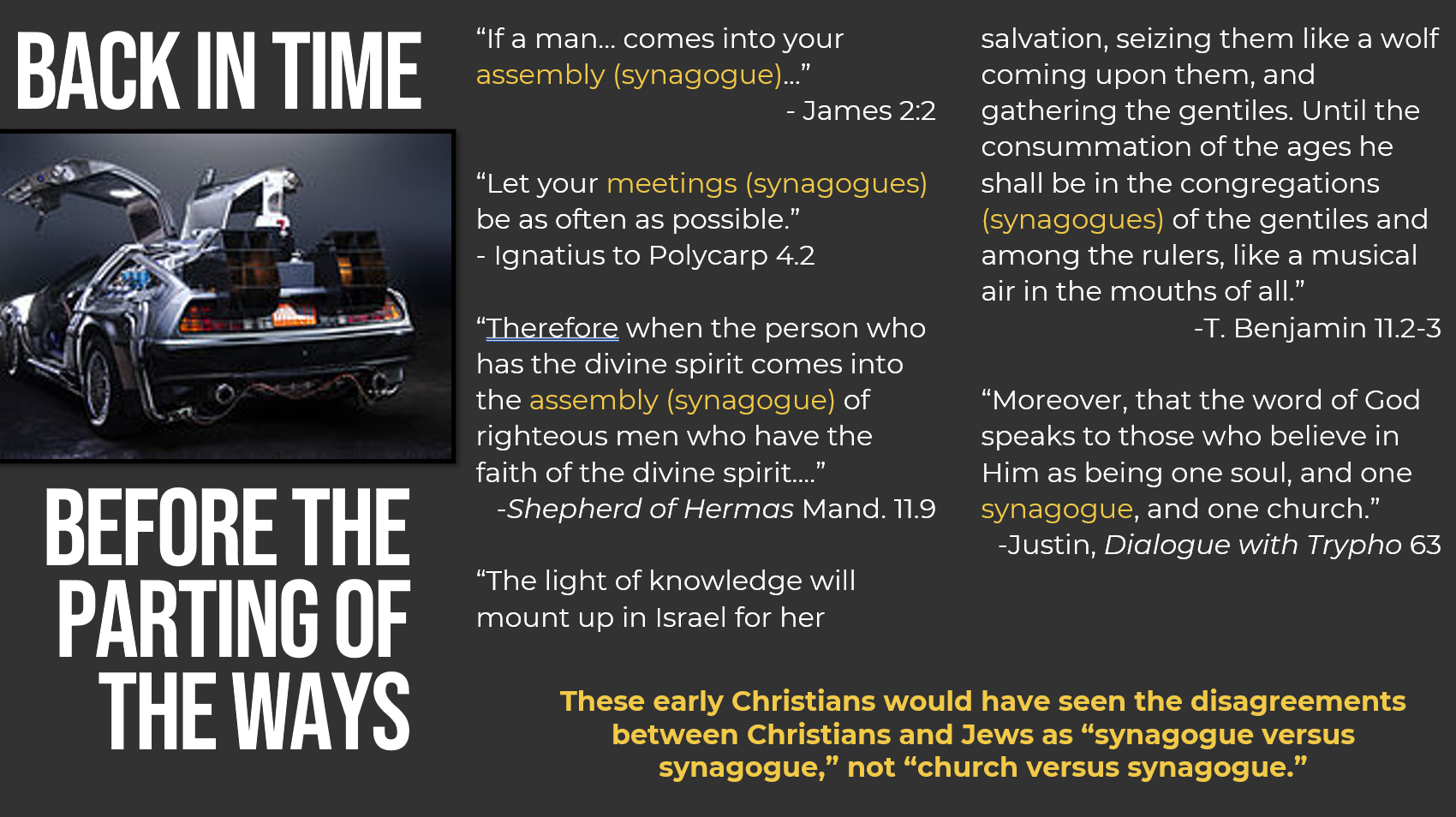
Thus, early Christians would have seen the disagreements between Christians and Jews as “synagogue versus synagogue” and not “church versus synagogue.” The latter is an anachronistic imposition into the reality of the first-century.
The phrase “synagogue of Satan” from Revelation sounds like an antisemitic slur to the ears of anyone listening after the fourth century CE, when the division between church and synagogue became acute. However, back in the first century CE, this phrase may have been semantically equivalent to:
- “A congregation of Satan”
- “An assembly of Satan”
- “A church of Satan”
There is even evidence within the Dead Sea Scrolls of the community critiquing others using an equivalent phrase:
Vicious men have sought my soul when I relied on your covenant. They are a council of futility, an assembly of Belial (1QHa 10:23; cf. 1QS 2).[63]
Thus, the pejorative use of the word “synagogue” within a first-century Christian text, such as the Book of Revelation, should not carry with it antisemitic overtones. To import antisemitic overtones to the word is to read Revelation anachronistically and unfairly.
9.2. Gentile God-fearers and Proselytes in Ancient Asia Minor
It may surprise many modern readers that Judaism in the first century (and even later) was a missionary religion that attracted Gentiles to adhere to Judaism in varying degrees, i.e., proselytes and God-fearers. We see evidence of this in literary texts from the era,[64] as well as in archaeological evidence.
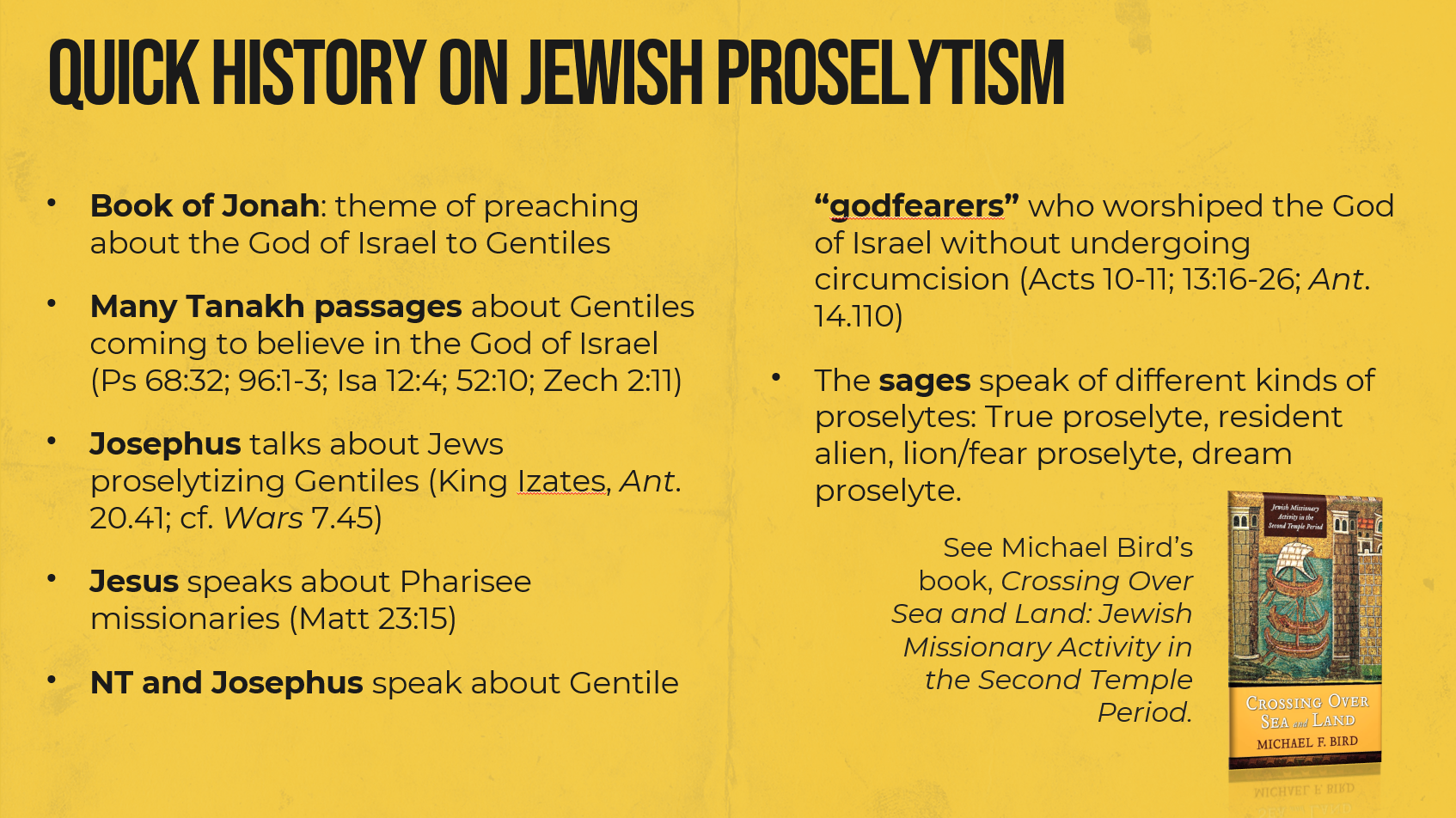
Figure 4 - Quick History on Jewish Proselytism, Part I
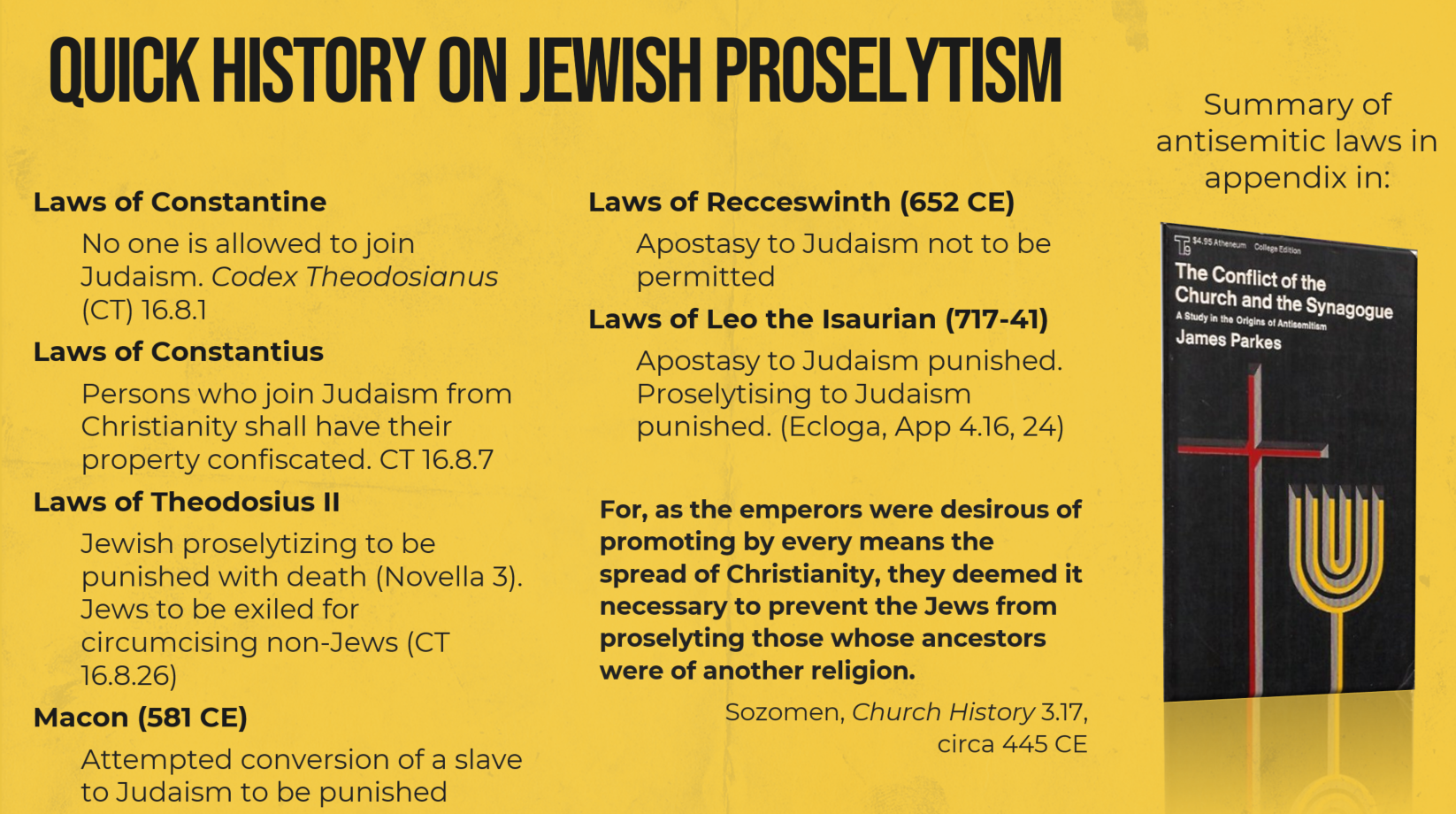
Figure 5 - Quick History on Jewish Proselytism, Part II
Proselytes are familiar to those who have read the later rabbinic writings. New Testament scholar Scot McKnight summarizes the sages’ understanding of different types of proselytes to Judaism:
The rabbis made several distinctions among proselytes, including the following: the true proselyte (ger sedeq; see b. Pesaḥ. 21b; b. Giṭ. 57b), the resident alien (ger toshab; see b. ʿAbod. Zar. 64b; b. Giṭ. 57b), the lion/fear proselyte (ger ʾarayot; see b. Qidd. 75ab) and the dream proselyte (ger halomot; see b.Yebam. 24b; b. Menaḥ. 44a).[65]
However, another type of quasi-proselyte was prevalent in the first through the third centuries CE: the God-fearer. Research professor Joshua Ezra Burns, who specializes in Judaism and Christianity in antiquity, explains:
A number of ancient witnesses attest to the existence of Gentiles who adhered to certain characteristically Jewish practices and beliefs without undertaking formal conversion to Judaism. In contrast to proselytes, or Gentiles who did formally convert to Judaism, these individuals had no defined status in the Jewish legal tradition and thus occupied no fixed position within ancient Jewish society. These Gentiles were often described in terms that appear to reflect a common commitment to fear the God of the Jews (cf. Deut. 10:20).[66]
What are these “number of ancient witnesses” that Burns refers to? Here are several:
- Cornelius the Centurion was called a God-fearer who gave alms and prayed continually to the God of Israel, but was uncircumcised (Acts 10:2; 11:3).
- When Paul preached in the synagogue of Antioch in Pisidia, he addressed the “Men of Israel and [those] who fear God” (Acts 13:16). Later he said, “Brothers, sons of the family of Abraham, and those among you who fear God. . . .” (Acts 13:26).
- Gentile God-fearers from Asia Minor and Europe sent their contributions to the temple in Jerusalem (Josephus, Antiquities 14.110).
- King Izates was initially counseled by his advisor to worship Israel’s God and keep the commandments without undergoing circumcision (Josephus, Antiquities 20.41).[67]
All these passages refer to Gentile God-fearers in the first century. Moreover, archeological evidence confirms the presence of Gentile God-fearers in the synagogues:
Evidence culled from sites throughout the Mediterranean seem to apply the God-fearer typology to Gentiles who simply maintained good social relations with their Jewish neighbors. Perhaps not coincidentally, many of the inscriptions featuring the God-fearer typology derive from Asia Minor, the primary setting of the God-fearers in the book of Acts.[68]
The most significant evidence of this phenomenon comes a century later than the time period of the book of Revelation, in 210 CE. Early church scholar Everett Ferguson writes about the discovery of inscriptions in the Asia Minor town of Aphrodisias:
The discovery of a Jewish inscription at Aphrodisias, dated about a.d. 210 and containing a list of 126 donors to the Jewish community, of whom 54 are identified as “Godfearers” (theosebeis), gives indisputable evidence of the large number of Gentiles who could be attracted to the synagogue. Wives and children of Godfearers often became full proselytes.[69]
Commenting on this discovery, New Testament scholar Paul Trebilco writes,
Although Diaspora Jews in general do not seem to have been involved in an organized, active mission to convert Gentiles… they do seem to have welcomed Gentiles who were attracted to the Jewish community, either as Godfearers or proselytes, and this seems to have occurred most notably in Asia Minor. The existence of Godfearers points to the attractiveness to Gentiles of some Jewish communities in Asia Minor and the openness of Jews to the involvement of Gentiles in their communities.[70]
This is all the more striking because Aphrodisias is only a few miles away from the towns of Thyatira and Philadelphia, the Asia Minor towns mentioned in Revelation as having “those who say they are Jews but are not.” Although it may be anachronistic to appeal to a 210 CE inscription to give commentary on a 95 CE reference, it is plausible that the same kinds of Gentile God-fearers were present at the earlier date, since the first-century literary evidence indicates the presence of God-fearers in this region as well.
So, I have established that there was a group of Gentiles who attended synagogues in the Asia Minor region where Revelation is addressed. Yet, another line of argument from sociology increases the plausibility of proselytes and God-fearers being in the crosshairs of Revelation’s criticism.
To be a Gentile God-fearer was to exist in an inherently unstable position. A God-fearer was not a Jew, since he had not converted to Judaism through circumcision. At the same time, he attempted to observe as much of the Torah as he could muster, which was a lifestyle unique to Jews. Thus, in the eyes of Jewish people, a God-fearer was less than a convert and likely deserving of criticism for not going all the way. To Gentiles, a God-fearer was an odd follower of another nation’s law, without being a part of that nation. Thus, God-fearers were confronted with a double temptation: Risking returning to their pagan practices, or else giving into full proselyte status with circumcision. To be a God-fearer was to continually feel caught in the middle and insecure.
Now, imagine a group of Gentiles who were previously pagans but had a radical encounter with Yeshua’s teachings. Attracted to his message of forgiveness and righteousness and new life, these Gentiles left their pagan ways behind and began attending a local congregation of Jewish and Gentile believers in Jesus. They began learning the Tanakh and following the teachings of Yeshua, a Jewish rabbi. They sat under the leadership of Yeshua’s Jewish disciples, such as John, Paul, and Philip, all of whom were active preachers in Asia Minor. Day after day, these former pagan Gentiles were adopting Judaic ways of thinking and living under the leadership of Yeshua’s Jewish followers.
And yet, there was a synagogue down the road where these Gentiles’ family members were attending as God-fearers and proselytes. That synagogue rejected Jesus as the Messiah and rejected the message of his followers. The synagogue had been attracting Gentile God-fearers for quite some time, and now there was a rival congregation of Yeshua-followers that was stealing the missionary momentum. Now there was a Jewish-on-Jewish competition for the hearts and minds of potential Gentile converts. Who will win them: the synagogue or the upstart Yeshua-believing congregations?
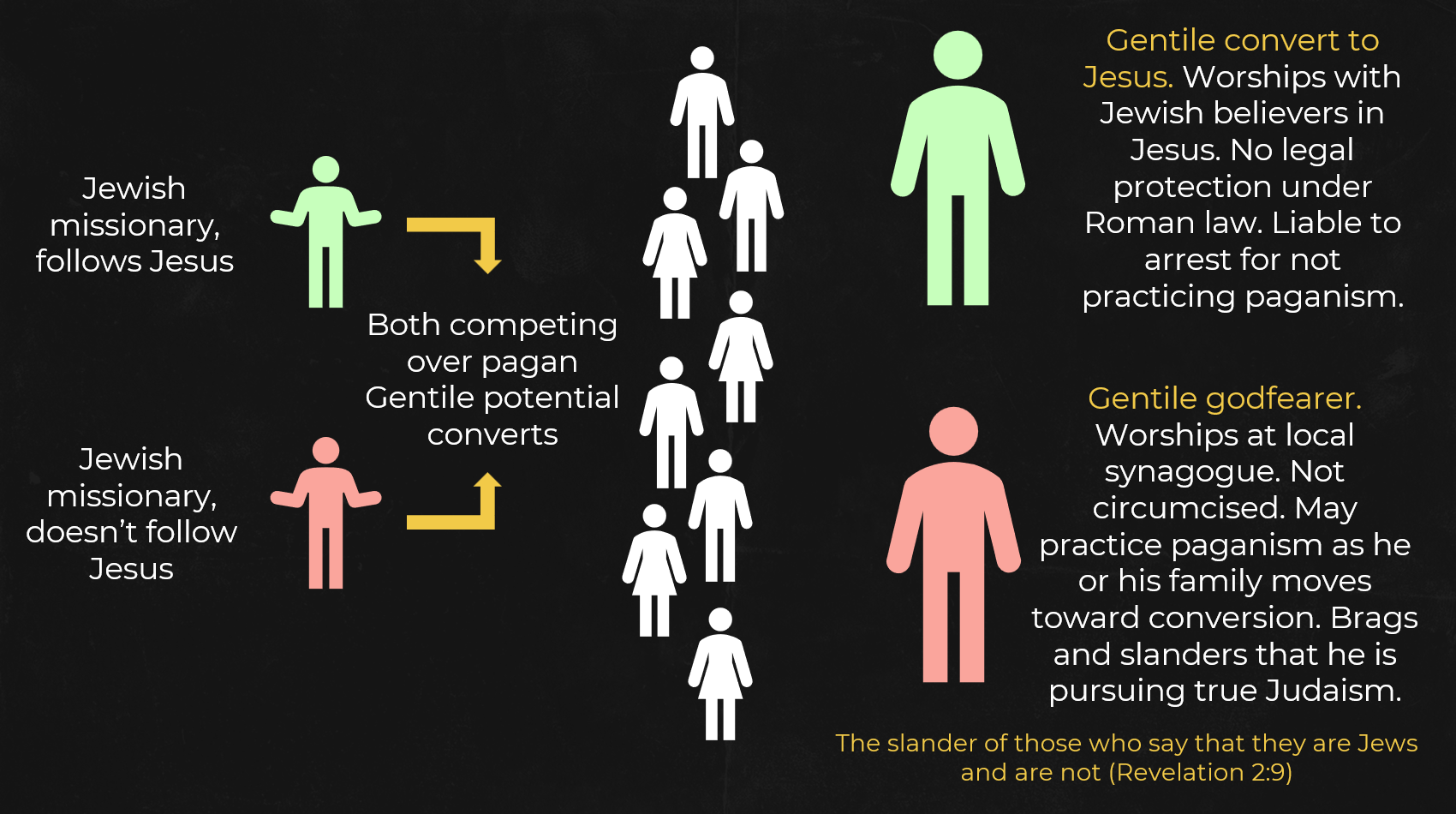
Figure 5 - Missionary Competition for Gentiles
It is not hard to imagine that the God-fearers in the synagogues would begin asserting superiority over their Yeshua-following brethren to defend their turf. Those Gentiles who had become full proselytes to Judaism could claim that they were “true Jews,” and the God-fearers could join the chorus by saying that they were on their way to becoming true Jews as well. Perhaps the God-fearers would overstate their case and lie that they were already Jews. By making these proclamations, they could criticize both Jewish and Gentile followers of Jesus. Their claims would communicate that Jewish believers in Jesus were following an apostate version of Judaism (a position that lives on today), and they would communicate to Gentile believers in Jesus that they left paganism for the wrong form of Judaism. These God-fearers might have perceived Gentile followers of Jesus as converting to falsehood and themselves in the synagogue as moving toward the truth.
In my opinion, the letters in Revelation are saying, “No, you God-fearers and proselytes are not Jews, despite what you might think from your pursuit of Torah and circumcision. You are non-Jewish impostors who have convinced yourselves of your Jewishness, but you are still Gentiles. In fact, instead of the synagogues providing you with an identity of Jewishness, instead, you are following the spirit of Satan as you adhere to what they say about Jesus.”
To sum up, we understand the Revelation passages as follows:
- Those who “say they are Jews but are not” are actually Gentiles who converted to Judaism or were on their way to convert. They were ethnic Gentiles. This is a straightforward explanation for why someone might say they are Jewish but are not really.
- The proselytes and God-fearers in the synagogue were slandering Yeshua’s followers to convince Jewish people of the correctness of their attraction to the synagogue.
- The proselytes and God-fearers were referred to as a synagogue (Greek for “assembly”) because they assembled together with Jewish people for religious and other purposes.
- The proselytes and God-fearers in the synagogue were instruments of Satan (in John’s mind) because they opposed the message given by Yeshua and his followers.
In conclusion, we are convinced that the rhetoric in Revelation 2 and 3 is addressed to a group of ethnic Gentiles who attended synagogues in the Asia Minor region and opposed the message of Yeshua through slandering his followers. It is illegitimate to apply this rhetoric beyond the confines of the original addressees. This rhetoric does not apply to Jews, since they fail to meet the requirement of “not being Jews.” While Jewish people may often oppose Yeshua’s message, they do not lose their Jewishness in the process, and they do not become active partners in doing Satan’s bidding.
10. Conclusion
One of the most common beliefs that Jewish believers in Yeshua hold before coming to believe in him is that the New Testament is an antisemitic book. This is often assumed without actual investigation. In this article, I have gone directly to the passages that are most often identified as antisemitic in nature. I have spoken frankly and honestly about passages that come across as harsh and confrontational.
However, once we recognize that these passages were written in a Jewish family context, using Jewish methods of thought and criticism, in line with the Hebrew Prophets, and in the hope of the repentance of the Jewish people and reconciliation with her Messiah, the claims of antisemitism lose their credibility. The New Testament is often a tragic reminder that Yeshua’s life, teachings, and resurrection resulted in a painful Jewish family rivalry, just as he prophesied (Luke 12:52–53).
I am heartbroken that the Jewish people remain so divided on this issue, and I are appalled at how later generations of antisemitic Gentiles used this family debate against the Jewish people in cruel and illegitimate ways. We at Chosen People Answers desire Jewish people to open up the pages of the New Testament and find what we found: abundant life through our Messiah who loved us.
As the Apostle Paul said about his people, “Brothers, my heart’s desire and prayer to God for them is that they may be saved” (Rom 10:1).
11. Bibliography
Alexander, Philip S. “‘The Parting of the Ways’ from the Perspective of Rabbinic Judaism.” In Jews and Christians: The Parting of the Ways, A.D. 70 to 135: The Second Durham-Tübingen Research Symposium on Earliest Christianity and Judaism, edited by James D. G. Dunn, 1–25. Grand Rapids, MI: Eerdmans, 1999.
Barnett, Paul. The Birth of Christianity: The First Twenty Years. Grand Rapids, MI: Eerdmans, 2005.
Bird, Michael F. Crossing Over Sea and Land: Jewish Missionary Activity in the Second Temple Period. Grand Rapids, MI: Baker Academic, 2013.
Blomberg, Craig. Matthew. Vol. 22. Nashville, TN: B&H, 1992.
Brown, Michael L. Answering Jewish Objections to Jesus: General and Historical Objections. Vol. 1. Grand Rapids, MI: Baker Books, 2000.
Burns, Joshua Ezra. “God-Fearers.” In The Eerdmans Dictionary of Early Judaism, edited by John J. Collins and Daniel C. Harlow. Grand Rapids, MI: Eerdmans, 2010.
Carson, D.A., Walter W. Wessel, and Mark L. Strauss. Matthew–Mark. Revised ed. Edited by Tremper Longman III and David E. Garland. Vol. 9. The Expositor’s Bible Commentary. Grand Rapids, MI: Zondervan, 2010.
Cathcart, Kevin, Michael Maher, and Martin McNamara, eds. The Aramaic Bible: The Targum Onqelos to Deuteronomy. Vol. 9. Collegeville, MN: Liturgical Press, 1990.
Cook, Michael J. “Foreword.” In Israel’s Last Prophet, by David L. Turner, xi–xvi. Jesus and the Jewish Leaders in Matthew 23. 1517 Media, 2015.
———. Modern Jews Engage the New Testament: Enhancing Jewish Well-Being in a Christian Environment. Woodstock, VT: Jewish Lights Pub., 2008.
Epiphanius. The Panarion of Epiphanius of Salamis, Book I. 2nd Revised, Expanded ed. Translated by Frank Williams. Boston, MA: Brill, 2008.
Ferguson, Everett. Backgrounds of Early Christianity. Third Edition. Grand Rapids, MI: Eerdmans, 2003.
Foerster, Werner. “Διαβάλλω, Διάβολος.” In Theological Dictionary of the New Testament, edited by Gerhard Kittel, Gerhard Friedrich, and Geoffrey William Bromiley, translated by Geoffrey William Bromiley, 2:71–81. Grand Rapids, MI: Eerdmans, 1964.
Frankfurter, David. “So-Called Jews and Their Synagogues of Satan.” In The Jewish Annotated New Testament, 2nd ed., 543. New York, NY: Oxford University Press, 2017.
Garcı́a Martı́nez, Florentino, and Eibert J. C. Tigchelaar, eds. The Dead Sea Scrolls Study Edition. 2 vols. New York, NY: Brill, 1997–1998.
Ginzberg, Louis, Henrietta Szold, and Paul Radin. Legends of the Jews. 2nd ed. Philadelphia: Jewish Publication Society, 2003.
Kruse, Colin G. Paul’s Letter to the Romans. Edited by D. A. Carson. Grand Rapids, MI: Eerdmans, 2012.
Levine, Amy-Jill, and Marc Zvi Brettler, eds. The Jewish Annotated New Testament. 2nd ed. Oxford, UK: Oxford University Press, 2017.
Lugo, Luis, Alan Cooperman, Gregory A Smith, Erin O’Connell, and Sandra Stencel. A Portrait of Jewish Americans: Findings from a Pew Research Center Survey of U.S. Jews. Washington, D.C.: Pew Research Center, 2013.
Magidor, Ofra. “Category Mistakes.” In The Stanford Encyclopedia of Philosophy, Spring 2025, edited by Edward N. Zalta and Uri Nodelman. Metaphysics Research Lab, Stanford University, 2025. https://plato.stanford.edu/archives/spr2025/entries/category-mistakes/.
McKnight, Scot. “Proselytism and Godfearers.” In Dictionary of New Testament Background, edited by Craig A. Evans and Stanley E. Porter, 835–47. Downers Grove, IL: InterVarsity Press, 2000.
Moo, Douglas J. The Epistle to the Romans. Grand Rapids, MI: Wm. B. Eerdmans Publishing Co., 1996.
Motyer, Stephen. “Editorial: Is John’s Gospel Anti-Semitic?” Themelios 23, no. 2 (1998).
———. Your Father the Devil?: A New Approach to John and “The Jews.” Colorado Springs, CO: Paternoster, 1997.
Mounce, Robert H. Romans. Vol. 27. Nashville, TN: Broadman & Holman Publishers, 1995.
Nanos, Mark D. “Commentary on Romans 2:29.” In The Jewish Annotated New Testament, 2nd ed., edited by Amy-Jill Levine and Marc Zvi Brettler. Oxford, UK: Oxford University Press, 2017.
Neusner, Jacob, ed. The Babylonian Talmud: A Translation and Commentary. Translated by Jacob Neusner, Tzvee Zahavy, Alan J. Avery-Peck, B. Barry Levy, Martin S. Jafee, and Peter Haas. 22 vols. Peabody, MA: Hendrickson, 2011.
Reinhartz, Adele. “John, Gospel Of.” In The Eerdmans Dictionary of Early Judaism, edited by John J. Collins and Daniel C. Harlow. Grand Rapids, MI: Eerdmans, 2010.
———. “The Gospel According to John.” In The Jewish Annotated New Testament, 2nd ed., edited by Amy-Jill Levine and Marc Zvi Brettler. Oxford, UK: Oxford University Press, 2017.
Sandmel, David Fox. “1 Thessalonians.” In The Jewish Annotated New Testament, edited by Amy-Jill Levine and Marc Zvi Brettler. New York, NY: Oxford University Press, 2011.
Sandmel, Samuel. A Jewish Understanding of the New Testament. With David Sandmel. Woodstock, VT: SkyLight Paths, 2005.
Schreckenberg, Heinz. The Jews in Christian Art: An Illustrated History. New York: Continuum Intl Pub Group, 1997.
Scott, James M. “Paul’s Use of Deuteronomic Tradition.” Journal of Biblical Literature 112 (1993).
Silverstein, Shraga. “Sifrei Devarim.” Sefaria, n.d. https://www.sefaria.org/Sifrei_Devarim.96.9?lang=en&with=Translations&lang2=en.
Skarsaune, Oskar, and Reidar Hvalvik, eds. Jewish Believers in Jesus: The Early Centuries. Peabody, MA: Hendrickson, 2007.
Stern, David H. Jewish New Testament Commentary. Clarksville, MD: Jewish New Testament Publications, 1992.
Telushkin, Joseph. A Code of Jewish Ethics. Kindle. New York, NY: Bell Tower, 2006.
The Holy Bible: English Standard Version. Wheaton, IL: Crossway Bibles, 2016.
Trail, Ronald. An Exegetical Summary of Revelation 1–11. 2nd ed. Dallas, TX: SIL International, 2008.
Treblico, Paul R. “Jewish Communities in Asia Minor.” In Dictionary of New Testament Background, edited by Craig A. Evans and Stanley E. Porter. Downers Grove, IL: InterVarsity, 2000.
Weatherly, J.A. “Anti-Semitism.” In Dictionary of Jesus and the Gospels, First ed., edited by Joel B Green, Scot McKnight, and I. Howard Marshall. Downers Grove, IL: InterVarsity Press, 1992.